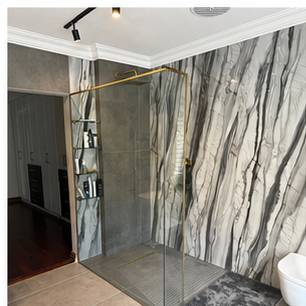
1200 x 2800 or 1600 x 3200: Choosing a Porcelain Slab Format
Larger porcelain slabs can reduce joints, but the right format depends on the wall, access route, handling, cuts, pattern, support and installation plan.
Journal category
Stone, marble, porcelain, glass, metal finishes and the details behind the visible surface.
A managed renovation
These articles explain the decisions behind a considered bathroom renovation. When you are ready to discuss the room itself, see our Durban and KZN bathroom renovation service →
Larger porcelain slabs can reduce joints, but the right format depends on the wall, access route, handling, cuts, pattern, support and installation plan.
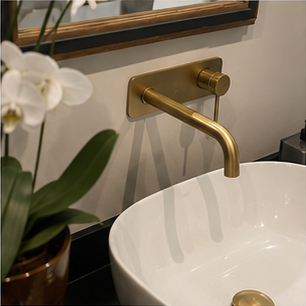
Mirror height is not a guess measured from the floor. Learn how basins, wall-mounted taps, splash zones, lighting and user height affect the final mirror position in a luxury bathroom.
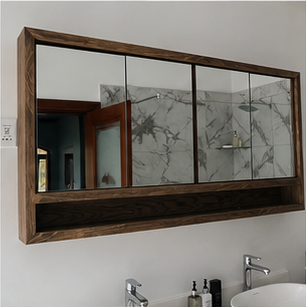
A large bathroom mirror is a heavy glass product, not simply a decorative panel. Understand safety backing, wall condition, adhesive compatibility, fixing and edge protection before installation.
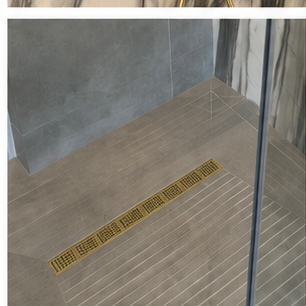
A tile described as suitable for bathrooms may still need separate checking for wet-floor use, slip behaviour, finish, drainage and maintenance. The application matters more than the label.
A mirror inside a shower is possible in some designs, but constant water, steam, cleaning products, edge sealing, glass safety and access make it a specialist decision.
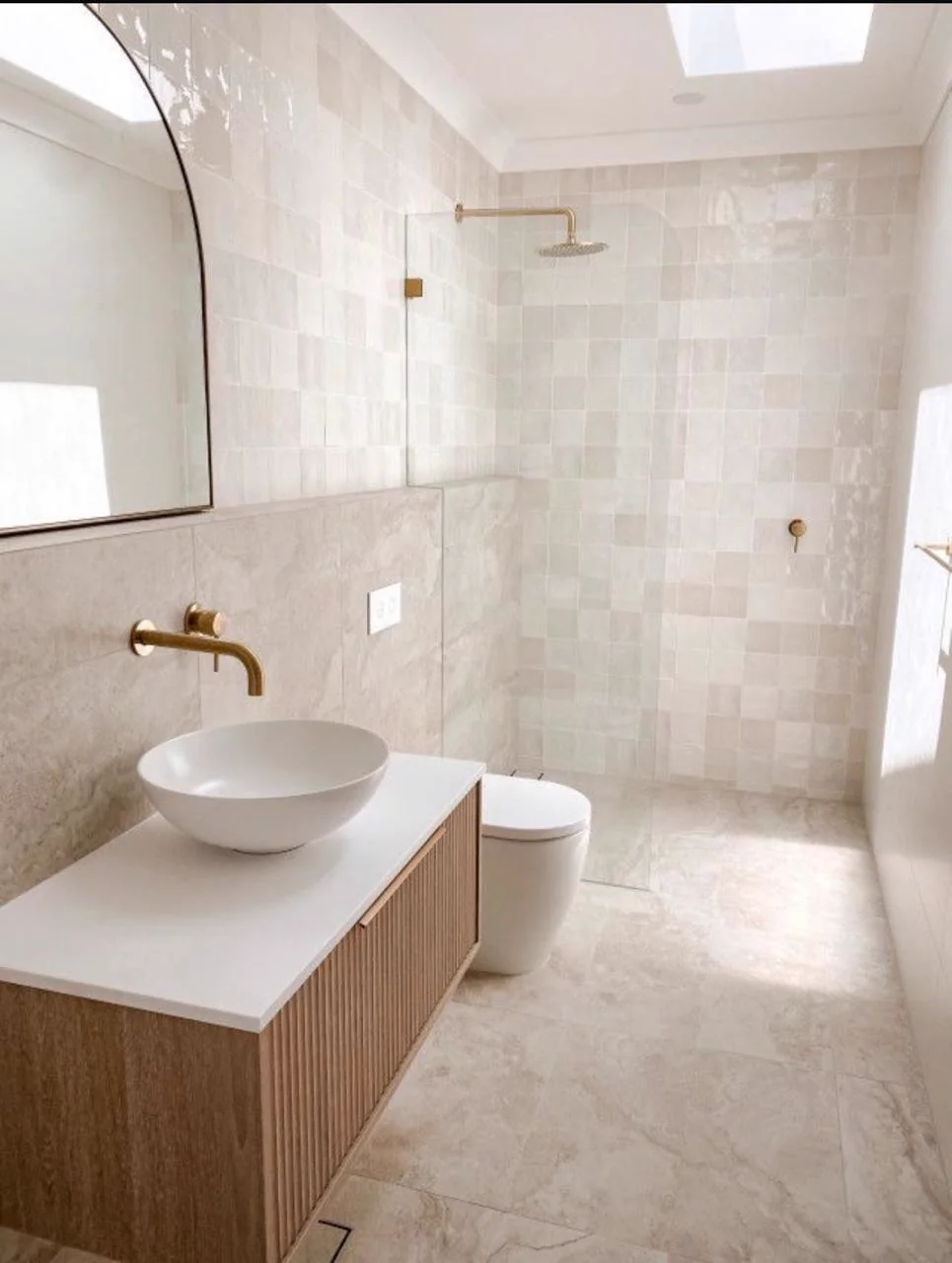
A polished porcelain tile may be visually beautiful, but a shower-floor decision needs product-specific wet-use, slip, drainage, cleaning and maintenance information.
A textured bathroom floor can support wet-use performance, but deeper texture may also hold residue and require a more deliberate cleaning routine. Grip and cleanability should be balanced.
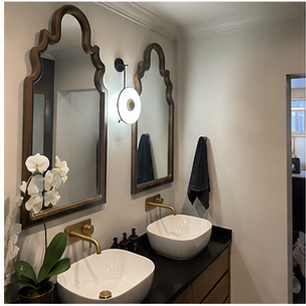
Round, arched, pill-shaped and organic bathroom mirrors need more than a good silhouette. Plan the frame, edge, fixing, lighting, clearances and cleaning access together.
Endless-veining porcelain uses digital design to create a more continuous stone pattern across large pieces. It still needs a carefully planned layout, cuts and lighting.
Front-lit mirrors can provide useful face lighting while backlit mirrors create a softer halo. The right choice depends on task, glare, wall position, room lighting and atmosphere.
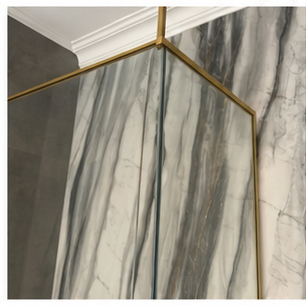
Shower-door load depends on glass size, thickness, hardware geometry and wall strength. Understand why three hinges are not automatically better than two in a frameless enclosure.
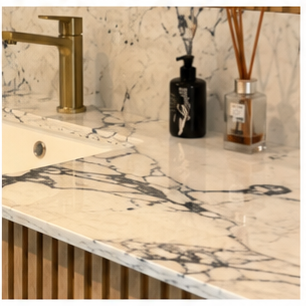
Grout colour controls how strongly the tile grid appears. The right choice depends on tile variation, room scale, cleaning expectations, lighting and the visual hierarchy of the bathroom.
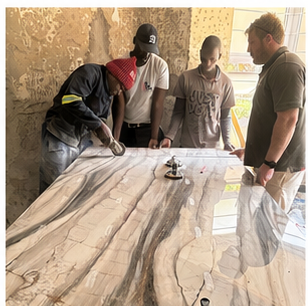
A tile product page should answer more than colour and price. Check format, body, finish, application, variation, slip information, care and technical documents before committing to a bathroom range.
A technical data sheet can reveal whether a tile suits the room, but only if the material, format, finish, application, variation and installation information are read together.
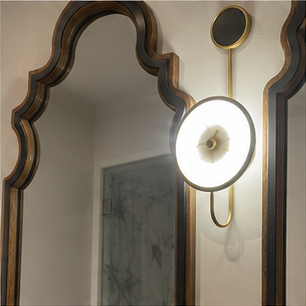
IP44 describes protection against specific ingress conditions; it does not make an electrical mirror waterproof or remove the need to follow bathroom zones and local electrical requirements.
The same porcelain design can feel completely different in polished, lappato or matt finishes. The decision affects light, grip, cleaning and how visible everyday marks become.
Low-iron or Opti-white shower glass can improve colour neutrality, but it is not automatically the best choice. Compare wall colour, glass thickness, hardware, privacy and budget.
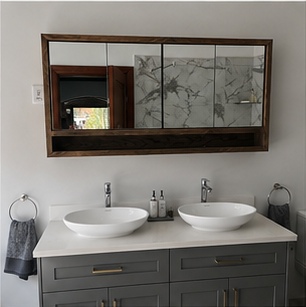
A magnifying mirror can be extremely useful, but its position, lighting, cable route, swing arm, finish and storage need to be coordinated with the main bathroom mirror.
Mirror TVs and smart bathroom mirrors can be elegant, but they require careful planning for reflection quality, viewing position, ventilation, power, service access and moisture exposure.
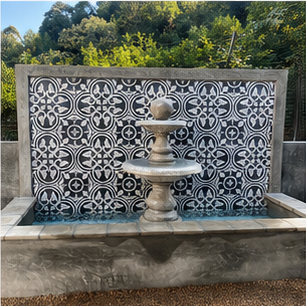
Large slabs are not the only way to create a premium bathroom. A patterned small-format tile can provide proportion, rhythm and detail when its layout and grout are carefully controlled.
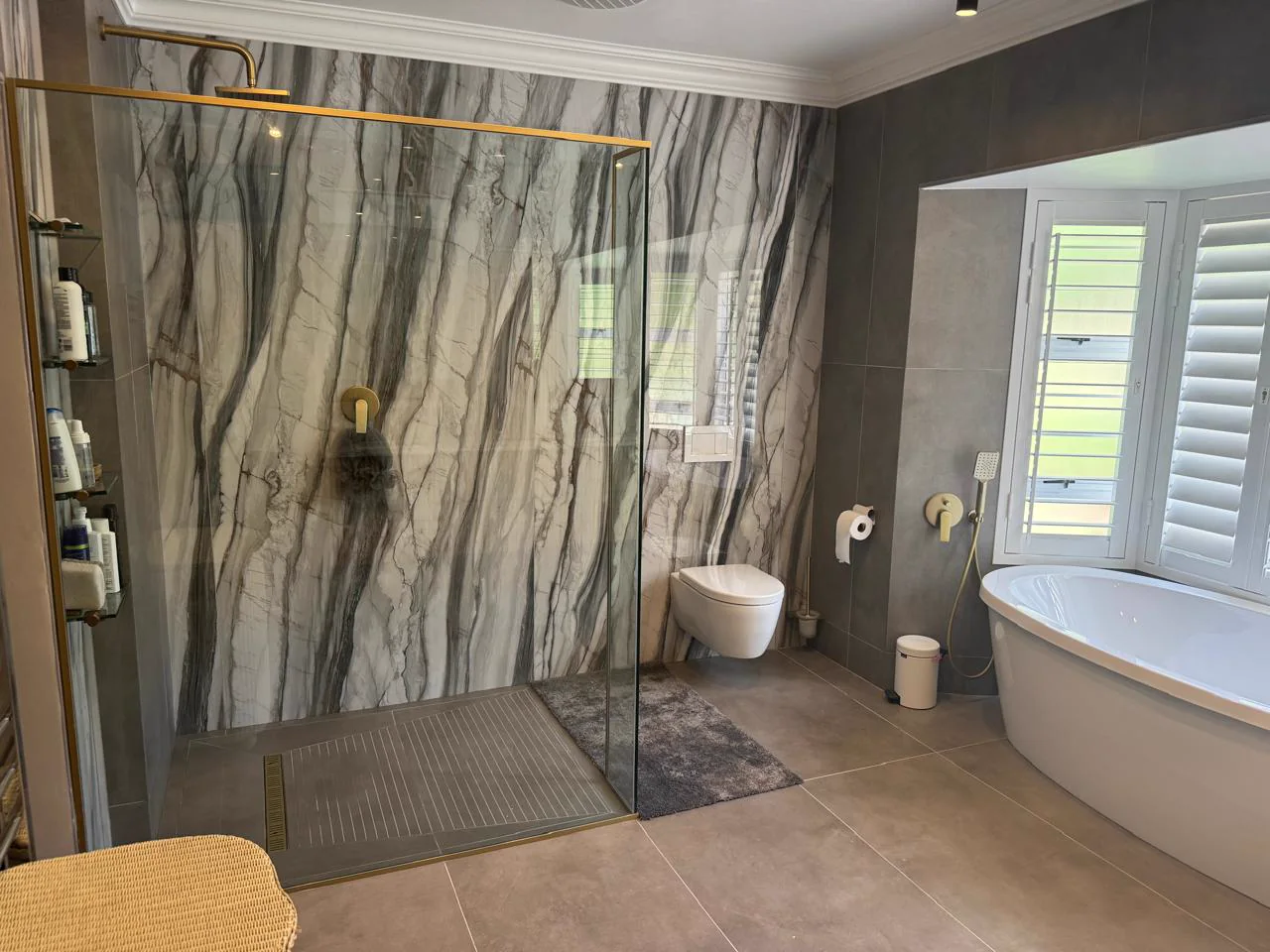
Stone-look porcelain can reproduce marble, travertine and other surfaces with consistent formats and lower maintenance demands, but it is still a manufactured product with its own technical limits.
Bookmatched porcelain can create a dramatic mirrored wall with controlled patterning, while natural marble brings geological variation. The design and maintenance decision should be made honestly.
A porcelain shower bench combines support, fall, waterproofing, edge protection, joints and cleaning. The tile finish is only the visible part of the detail.
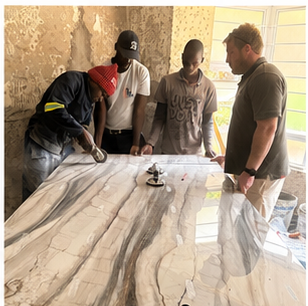
Large porcelain slabs change the logistics of a bathroom renovation. Delivery routes, staircases, lift dimensions, handling space and wall preparation should be checked before the slab is ordered.
A premium shower enclosure may need holes through tile or porcelain for hinges and clamps. Coordinate the glass hardware, tile layout and substrate before the finished surfaces are installed.
Porcelain and ceramic tiles are not interchangeable descriptions. Water absorption, intended application, body composition, finish and installation requirements should all be checked before a bathroom tile is selected.
A powder room mirror is often the first detail guests notice. Use scale, lighting, reflection, basin projection and wall finish to create a considered small bathroom in Durban.
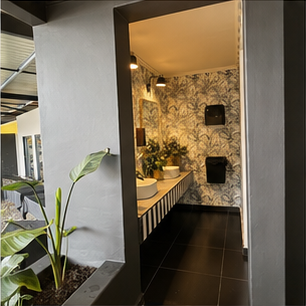
Wallpaper-style porcelain can create a dramatic bathroom wall without using paper in a wet environment. Its pattern, scale, lighting, cuts and surrounding surfaces still need careful control.
A finished porcelain or stone surface can be damaged by other trades, grout residue, tools and incorrect cleaning. Protecting it after fixing is part of delivering the bathroom.
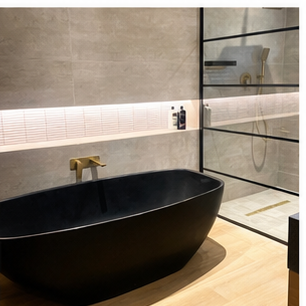
Compare luxury bath manufacturers by construction, weight, capacity, finish, repairability, warranty and local support rather than by appearance alone.
Slip-resistance labels can help compare products, but a safe shower floor depends on more than one rating. Finish, format, grout, falls, cleaning and the actual wet use all matter.
Rectified porcelain tiles have very straight, accurately cut edges, but they still need a properly specified grout joint. The joint allows for tolerance, movement and a finished installation that can be maintained.
Privacy glass changes the character of a shower enclosure. Compare reeded, satin, bronze and grey-tinted glass for light, cleaning, hardware and long-term design decisions.
A premium tile collection may offer the same visual design in different surface finishes. The choice affects wet use, cleaning, continuity and the transition between bathroom zones.
Premium tile ranges increasingly use surface technologies to improve wet-use grip while retaining a refined visual finish. The exact product data and intended application still need to be checked.
A sharp internal corner around a niche, socket or opening concentrates stress in a large porcelain piece. Corner radius, layout, support and fabrication should be considered before cutting.
Large-format tile can work inside a shower when the product, substrate, falls, drain, waterproofing, adhesive and handling plan are suitable for the application.
A shower floor does not have to use the identical tile as the rest of the bathroom. Coordinated tone, format and texture can create continuity while respecting drainage and wet-use requirements.
Choosing a shower-floor tile starts with the drain, falls and finished floor height. Large format, mosaic and linear-drain layouts each create different design and installation requirements.
Pivot and wall-hinged shower doors place load and movement in different parts of the enclosure. Compare clearances, support, seals and maintenance before choosing.
A custom shower enclosure has seals, hinges, clamps, finishes and glass that may need attention later. Choose a supplier and installer who can support the bathroom after handover.
Polished edges, safe visibility markings, cut-outs and alignment determine how refined a glass enclosure feels. Inspect the edge as carefully as the centre of the panel.
A nearly level shower entry depends on floor build-up, falls, waterproofing, drain planning and the glass detail. Understand the construction before choosing a threshold-free look.
The opening for a shower enclosure changes with waterproofing, screed, tile, stone and grout. Learn why final glass measurement should happen after the relevant bathroom finishes are complete.
Natural stone and shower glass can work beautifully together, but drilling, movement, sealants, water marks and fixing positions need to be coordinated before installation.
Protective shower-glass coatings can reduce cleaning effort, but they do not replace ventilation, a squeegee, correct cleaning or control of hard water.
Door seals, bottom sweeps and magnetic strips eventually wear. Plan for replacement parts and service access when specifying a premium shower-glass enclosure in KZN.
Shower glass is safety glazing, not ordinary glass. Understand why permanent marking, compliance documentation and correct installation matter in a Durban bathroom renovation.
A simple squeegee can protect expensive shower glass, coatings, seals and coastal hardware by removing water before minerals and soap residue dry.
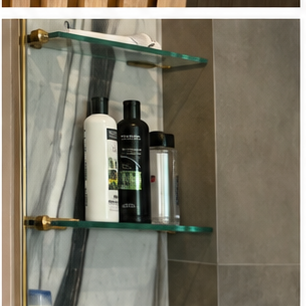
A shelf fixed to shower glass adds load and creates another hole or clamp. Plan its position, support, edge treatment, cleaning access and hardware before manufacture.
Shower-glass hinges, clamps and stabiliser bars can penetrate finished walls. Coordinate their fixing points with waterproofing, tile, substrate and sealant compatibility.
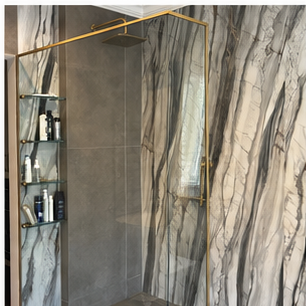
The shower head and body sprays influence where water lands, how much escapes at the door and whether a walk-in screen works. Plan the water path before final glass dimensions.
Sliding frameless shower doors save swing space, but rollers, glass weight, alignment, water retention and service parts must be planned carefully.
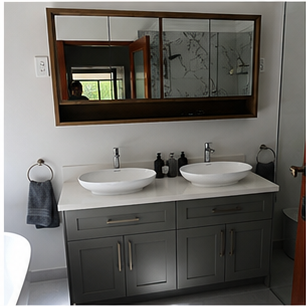
LED drivers, demisters, sensors and controls can last for years, but they remain electrical components. A smart mirror should be installed so those components can be diagnosed or replaced.
Steam showers place extra demands on glass, seals, hinges, ceilings and ventilation. Plan the enclosure as a controlled system rather than an ordinary shower with more steam.
A simple waste allowance cannot account for every bathroom layout. Tile quantity depends on format, pattern, room geometry, cuts, shade selection, breakage and future repairs.
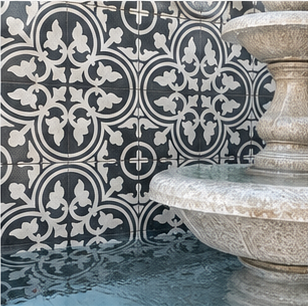
A sculptural or 3D wall tile is not only a pattern choice. Its relief changes shadow, cleaning, grout visibility and the way bathroom lighting needs to be positioned.
Tile batch, shade and calibre information can matter when additional material is ordered or a future repair is needed. Keep the product details with the bathroom handover records.
Adhesive has a working time and open time that depend on the product and site conditions. If a spread area skins before the tile is placed, the finished bond may not be what it appears.
Tile adhesive is part of the specification, not a generic bucket selected after the tile. The product class, substrate, tile, location and working conditions must be compatible.
A bathroom tile is the visible finish, not the waterproofing system. The substrate, falls, membrane, penetrations, adhesive and joints beneath it all contribute to a durable shower.
Levelling clips can help reduce lippage between neighbouring tiles, but they cannot correct a wall or floor that is outside the required flatness for large-format porcelain.
A small tile sample cannot show every effect of scale, lighting, grout, repetition and layout. Luxury bathroom tile decisions should be tested in the room they are intended for.
Touch and infrared controls solve different problems on LED and smart bathroom mirrors. Compare hygiene, false activation, placement, memory and serviceability before choosing a control.
A towel rail on shower glass can save wall space, but the panel, holes, hardware, door movement and towel position must be designed before the glass is toughened.
Combing tile adhesive in a controlled direction can help the ridges collapse beneath a large tile. The method must match the product and application, but random trowel marks are not a quality system.
A walk-in shower screen can look effortless, but the fixed panel, stabiliser arm, wall fixing, floor fall and water direction must work together.
A wall-hung WC is supported by its frame and structure behind the wall, not by the tile. Understand backing, anchoring, finished height and testing before closing the cistern wall.
Hinges, clamps and stabiliser bars transfer load into the wall. Compare masonry, drywall and tiled substrates before closing a bathroom wall around a frameless enclosure.
Colour Rendering Index describes how a light source reveals colours compared with a reference. It matters around a bathroom mirror, but colour temperature, beam position and glare matter too.
A mirror demister is a heated pad or heating zone behind the mirror that clears condensation from a defined area. Its size, position, control and electrical installation all matter.
Large-format tile is not defined by one universal size in every conversation. The important issue is how the tile’s dimensions change handling, substrate preparation, adhesive coverage, layout and installation risk.
Lippage is the visible height difference between neighbouring tile edges. With large-format porcelain, it is controlled through product selection, substrate preparation, layout and fixing technique.
PEI is a useful tile-performance term, but it should be interpreted for the actual application. It does not replace wet-floor, slip, finish, cleaning or manufacturer guidance.
Pilkington Optimirror is a specialist mirror-glass product positioned around optical quality and durability. The product is still only one part of a bathroom mirror installation.
Shade-variation ratings help describe how much a tile range may vary from piece to piece. They are important when planning a large bathroom surface or a stone-look installation.
A half-tile brick-bond layout can place the widest part of one tile beside the end of another. With bowed or large-format tiles, that pattern can increase lippage risk instead of improving the design.
Black edge marks are often linked to moisture reaching the mirror backing or edge. The glass, backing, wall, adhesive, ventilation and installation environment all matter.
Large-format porcelain installation depends on suitable adhesive coverage and contact. The correct application method comes from the product, substrate, tile and location rather than a shortcut.
Large-format porcelain can reduce grout lines and create a calm architectural finish, but it makes wall preparation, service coordination and adhesive coverage more demanding.
Material price cannot rescue poor layout, uneven substrates, mismatched shade, bad lighting, incorrect grout or rushed installation. Luxury is a complete bathroom decision.
A small reserve of correctly identified tile can make future repairs possible when a range, shade, face or finish is no longer readily available.
Fewer grout lines do not remove movement from a bathroom. Large-format tile installations still need planned movement and perimeter details suited to the room and the fixing system.
The green cast at the edge of ordinary mirror glass becomes more noticeable on large mirrors and pale bathrooms. Learn how low-iron glass changes the finished reflection.
Cloudy shower glass can come from mineral deposits, soap residue, poor ventilation or damaged coatings. Identify the cause before reaching for abrasive chemicals.
Hinge holes, handle cut-outs and notches cannot be casually added after shower glass is toughened. This is why accurate set-out and late final measurement are essential.
A thinner porcelain slab can reduce weight and open design possibilities, but it does not remove the need for careful support, transport, cutting, substrate preparation and installation.
A marble-look porcelain range can contain several printed faces, or a much larger collection of variations. Understanding the number of faces helps prevent visible repetition across a large bathroom.

Electrical features in a luxury bathroom need early coordination with the electrician, plumber, tiler and cabinet installer.
Book-matched marble is planned from the actual slabs, the room dimensions and the key visual lines before fabrication begins.
A physical slab shows movement, colour, fissures and translucency that samples cannot. Here is what KZN clients should inspect before reserving stone.
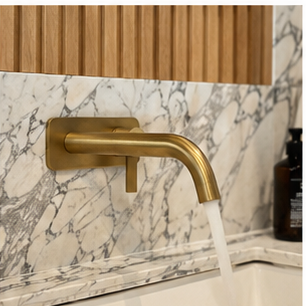
Cleaning guidance differs between manufacturers and finishes, so a general vinegar rule can damage the very tap it is meant to protect.
A luxury stone bathroom involves the client, slab yard, fabricator and renovator. Understanding each role helps the design stay accurate from selection to installation.
Epoxy and cementitious grouts behave differently. The right choice depends on the tile, location, appearance, maintenance expectations and system instructions.
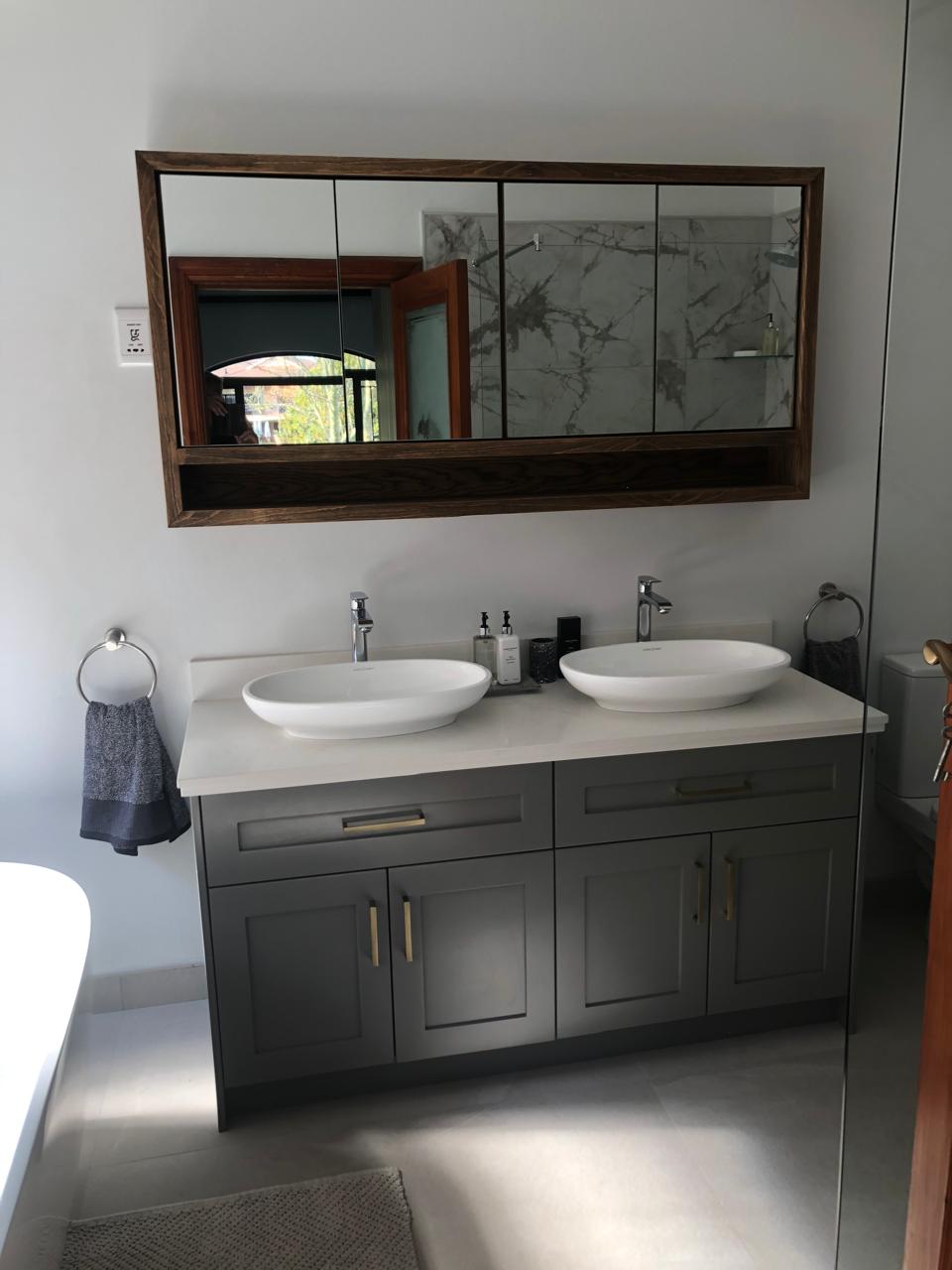
Frameless and grid-style shower screens create different detailing, cleaning and measurement decisions in a Durban bathroom renovation.
Some green marbles can react badly to moisture in the setting system. The stone and adhesive need to be assessed before installation.
Backlit onyx is a stone, lighting and support system. The actual slab must be tested before the wall, diffusion, wiring and access are fabricated.
Porcelain tiles are hard and durable, but drilling them for taps, glass and accessories requires the right tool, position and patience.
Large-format shower walls demand slab inspection, safe handling, accurate setting-out, prepared substrates, compatible bonding and careful finishing.
Large-format porcelain tiles can create a calm luxury finish, but they demand accurate substrate preparation, handling and adhesive coverage.
Large bathroom slabs are heavy, fragile and expensive to replace. Safe handling, temporary support and accurate installation planning matter before the stone arrives.
A practical Signature Bathrooms guide to choosing, fabricating, waterproofing and maintaining natural stone in Durban, Umhlanga and wider KZN bathrooms.
Premium tap warranties can treat the mechanism and decorative finish differently, especially for matt black, PVD and other non-chrome finishes.
Etching and staining are different problems. Understanding the difference helps Durban homeowners protect marble and avoid damaging it with the wrong cleaner.
Natural marble can create a remarkable luxury shower, but the stone is only the visible layer of a carefully coordinated wet-area system.
Natural stone wastage is shaped by slab size, vein direction, defects, cut-outs and the design. A good cut plan reduces waste without forcing poor-looking joins.
Natural stone can bring depth to a luxury bathroom, but selection, sealing, cleaning and ongoing care need to match the stone and the wet-area use.
Natural stone and sintered stone can both create a high-end bathroom. The better choice depends on the design, fabrication, maintenance and performance brief.
Polished and honed marble create different looks and maintenance expectations. The right finish depends on where the stone is used and how the bathroom is lived in.
Quartzite and marble can both create an exceptional bathroom, but they differ in hardness, acid sensitivity, appearance and maintenance expectations.
The back of a marble or onyx slab can change how it should be bonded. Mesh and resin treatments need to be identified before fabrication and installation.
Travertine can create a warm spa-like bathroom, but its fill, cut, surface finish and maintenance requirements should be understood before specification.
Hollow-sounding and loose tiles can result from movement, poor adhesive coverage, substrate problems or moisture. The visible symptom needs proper diagnosis.
New grout can improve the appearance of a bathroom, but it cannot replace waterproofing behind a failed shower. Learn what Durban homeowners should investigate first.
White and light-coloured marble can reveal adhesive shadowing, moisture sensitivity and discolouration. The bonding system must be chosen for the actual stone.
Choosing bathroom tiles involves more than appearance. This guide covers tile body types, sizes, finishes, grout and what performs best in KwaZulu-Natal's coastal and inland climate.
Frameless shower glass changes how a bathroom reads and performs. This guide covers glass thickness, layout, waterproofing and what to resolve before ordering in KZN.