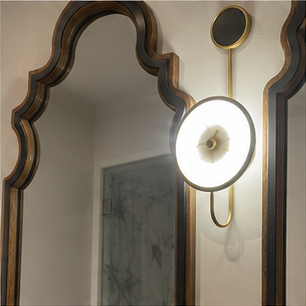
A powder room may be small, but it is often the bathroom visitors see first. That makes the mirror more than a practical object. It can establish the scale, mood and level of finish for the whole room, provided it is designed with the basin, light and wall surface rather than added afterwards.
Use the mirror to control the scale
A large mirror can make a compact powder room feel wider, while a shaped or framed mirror can give the room a stronger focal point. The choice depends on whether the design needs visual expansion or a more intimate decorative moment.
Do not ignore the basin projection
Small rooms leave little tolerance for a basin, tap and mirror that project too far into the walkway. A vessel basin can be especially important because its height and spout position affect the lower edge of the mirror and the usable reflection.
Lighting must flatter the face
A dramatic pendant or concealed strip may look beautiful in a photograph but still leave the face in shadow. Consider how the light reaches the user from the front and sides, not only how it illuminates the wall behind the mirror. Colour rendering is particularly noticeable in a room where visitors check their appearance.
Reflection needs to be intentional
Before fixing the mirror, stand at the doorway and from the basin position. Check what it reflects: a beautiful tile wall, a light, a toilet, a cluttered passage or an open door. In a small room, the reflection is part of the architecture.
A small room rewards accurate work
Tight dimensions make uneven gaps, crooked lights and poor silicone lines more visible. The mirror template, wall finish, basin, tap and light should be set out together before drilling or cutting.
Read about small powder-room basin projection, or see how a mirror can become a decorative object.