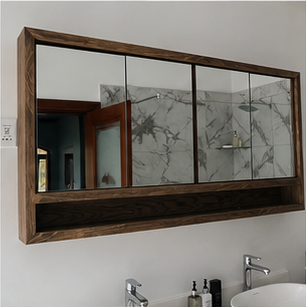
The larger the mirror, the less sensible it is to treat it as an accessory that can be attached with whatever adhesive is available. Glass quality, backing, wall condition, handling, fixing and the installation environment all affect the finished result and the long-term safety of the room.
Ask what happens if the glass breaks
Where safety-backed or safety-treated mirror glass is specified, confirm what the product actually provides and keep the manufacturer’s documentation. Do not assume that a product described as “safety” has the same construction, thickness or performance as another mirror with a similar sales label.
The wall must be suitable
A mirror follows the wall behind it. High spots, hollows, uneven tile, loose plaster or movement can create visible distortion and stress. Large-format glass needs a sufficiently flat, sound surface and a fixing method appropriate to the substrate.
Adhesive compatibility is critical
Some sealants and adhesives can damage mirror backing or contribute to edge failure. The product selected must be confirmed as compatible with the mirror backing and the wall finish. Using a general construction adhesive because it is already on site can turn an expensive mirror into a future replacement.
Plan handling and temporary support
Large mirrors need a clear route into the room, enough people or equipment for safe handling and a stable method of supporting the glass while the fixing cures. Basin tops, taps and finished floors should be protected during the operation.
Protect the edges
The edge is one of the most vulnerable parts of a mirror. It should not sit where water can remain trapped behind it, and it should be protected from impact during adjacent tiling, silicone work and cleaning. A good installation detail makes cleaning possible without forcing water into the perimeter.
Record the product
Keep the mirror specification, supplier details, backing information and cleaning instructions with the project handover. This makes future replacement or repair far easier than trying to identify a custom glass product years later.
Read why bathroom mirrors develop black edges, or see the premium bathroom handover checklist.