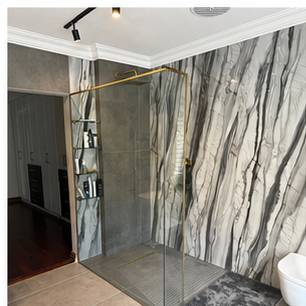
The tile is what the homeowner sees, so it is easy to assume that the tile and grout are what keep water out of the wall. They are not the complete waterproofing system.
The visible surface has limits
Tile, grout and sealant can reduce water reaching the construction, but they contain joints, changes of plane and service penetrations. A shower needs a compatible waterproofing system beneath the finish, detailed for the actual substrate and wet-area design.
The tile cannot replace that layer.
Large format does not remove penetrations
A slab may reduce the number of joints, but the room still has mixers, shower outlets, niches, benches, wastes and corners. Each opening or change of plane has to be coordinated before the tile is fixed.
The fewer visible joints can make the room calmer, but the hidden detailing remains important.
Drainage belongs in the same conversation
Falls, wastes, thresholds and waterproofing should be resolved before the finished tile layout is approved. Water that cannot reach the drain will remain a problem regardless of how expensive the tile is.
The surface, system and geometry need to agree.
The best finish protects what is underneath
A well-tiled shower is the final visible expression of preparation, waterproofing, substrate repair, adhesive choice, layout and workmanship. When any one of those is treated as an afterthought, the tile is being asked to hide a construction problem.
Read what sits beneath a properly waterproofed Durban shower, or see why regrouting does not repair failed waterproofing.