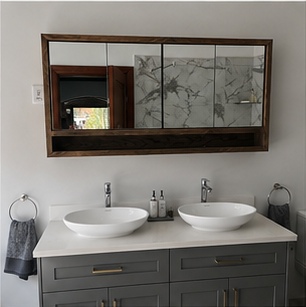
A magnifying mirror can be one of the most useful details in a main bathroom, but it can also interrupt an otherwise calm wall. The best result comes from deciding early where it will be used, how it will be lit and where it will disappear when it is not needed.
Position it for the actual user
The mirror should be close enough to the basin for comfortable use without forcing the person to lean over the countertop. A swing arm needs clearance from the main mirror, wall light, cabinet door and any tap below it.
Lighting determines whether it helps
Magnification makes shadows and glare more obvious. A poorly placed downlight can create an unflattering shadow, while a bright source reflected directly in the magnifying glass can make it difficult to use. Front or side lighting should be considered with the rest of the mirror scheme.
Recessed or surface-mounted
A recessed magnifying mirror can disappear into the wall but requires early coordination with the substrate and waterproofing where relevant. A surface-mounted or folding model is simpler to replace, but its projection must be checked against the room’s circulation and cleaning routine.
Keep the finish consistent
The arm, trim and mirror finish should relate to the basin mixers, cabinet hardware and other metalwork. A small accessory can look surprisingly prominent when it sits directly beside a large, quiet mirror.
Make it easy to maintain
Confirm how the mirror is cleaned, whether the light source or batteries are replaceable and whether the arm can be tightened or serviced. A useful fitting should remain useful after the novelty has gone.
Read about mirror height and basin coordination, or see how to reduce visual noise in a bathroom.