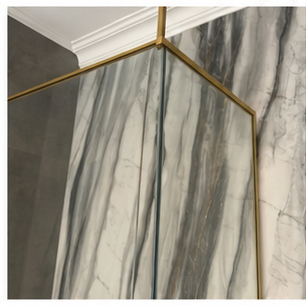
A walk-in screen creates a calm, open bathroom, but the fixed glass panel still needs support. The stabiliser arm, wall fixing, floor condition and shower direction determine whether the screen remains secure and whether the rest of the bathroom stays dry.
The panel has limits
A large unsupported glass panel can flex or move. The permissible size and support arrangement depend on the selected glass, thickness, hardware and fixing points. A stabiliser is not decorative; it controls movement in the assembly.
The fixing returns to the wall
The arm or clamp transfers load to the wall. The substrate behind the tile must be prepared for that load, and any penetration must be coordinated with the wet-area waterproofing.
Open does not mean water can go anywhere
The shower head, body sprays, screen width, entry gap and floor falls need to be considered together. A walk-in shower may need a longer panel, a return, a small threshold or a different spray position to retain water.
Think about cleaning access
The space between the glass and the wall, the stabiliser fitting and the floor edge should remain reachable. An open screen that creates a narrow inaccessible pocket can become difficult to keep clean.
Design the movement route
Confirm how a person enters, where towels are stored, where the door opens elsewhere in the room and what the screen reflects from the doorway. The best walk-in shower is open because the geometry works, not because a panel was simply removed.
Read about why walk-in showers can flood Durban bathrooms, or see why unsupported fixed panels have limits.