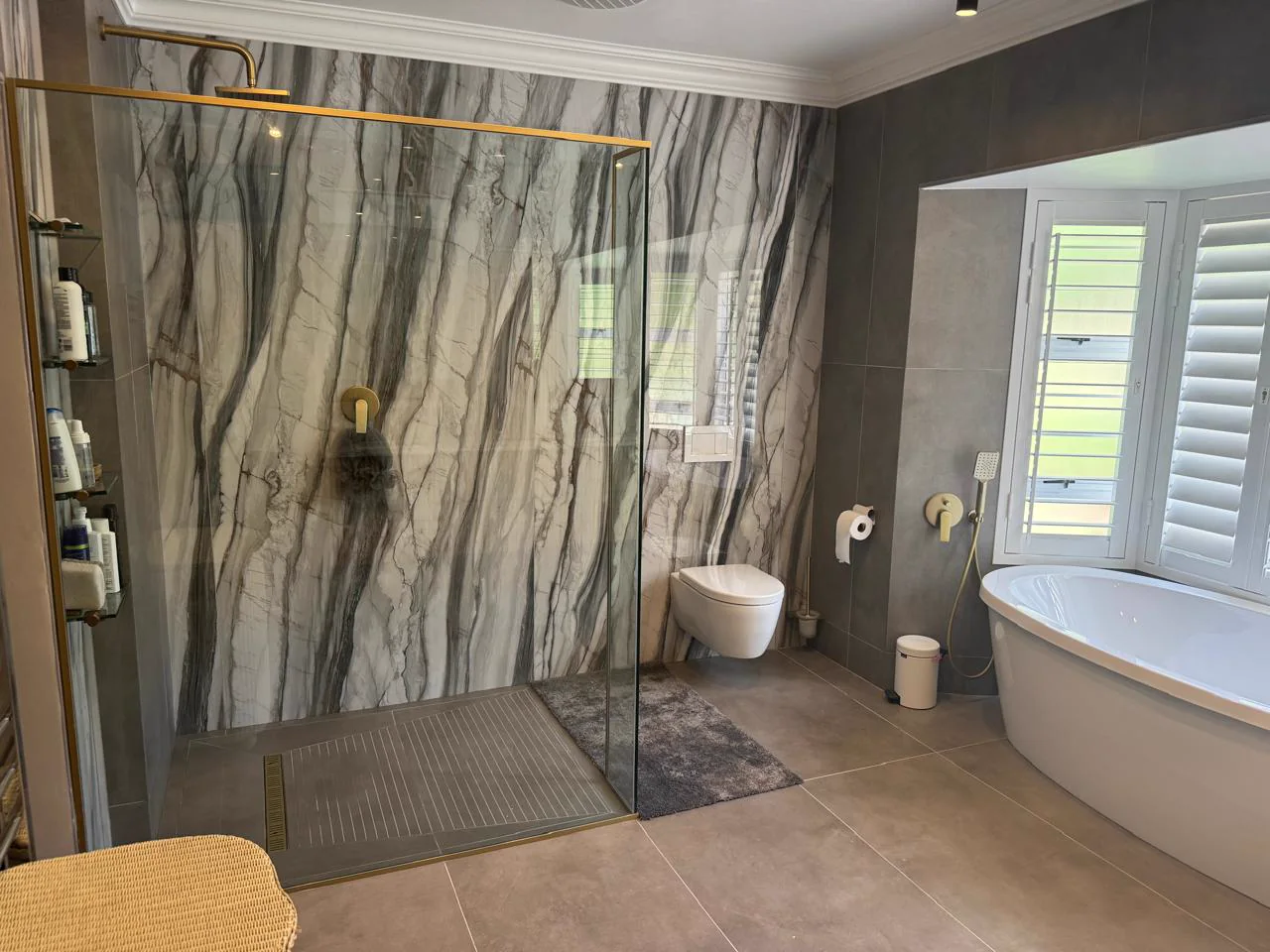
Not every marble behaves the same way
Green marble can be a remarkable choice for a luxury bathroom. Stones sold under names such as Verde Alpi or Verde Guatemala may have characteristics that make them more sensitive to moisture during installation than an ordinary ceramic tile or less reactive stone.
The risk is not obvious from the front of the slab. The stone and the setting materials have to be considered as a system.
What can happen?
With some moisture-sensitive stones, water from a cement-based setting material can interact with the stone and contribute to curling, doming, warping or loss of bond. The exact risk depends on the material, thickness, backing, substrate, adhesive and installation conditions.
That is why a generic instruction such as “use a good tile adhesive” is not enough for a valuable green marble installation.
Identify the actual material first
Commercial names are not always consistent, and a green-look porcelain or engineered slab is not the same as natural green marble. Confirm whether the product is genuine stone, inspect the back for mesh or resin, and obtain the technical guidance for the actual product.
Where the stone is valuable, a small compatibility test or mock-up can expose a problem before the full bathroom is committed.
The rest of the wet-area system still matters
Using a suitable adhesive does not remove the need for a sound substrate, independent waterproofing, correct movement joints and controlled curing. A stone can be technically compatible with an adhesive and still fail if the wall is moving or the waterproofing has been poorly prepared.
Green marble rewards careful specification. It should be treated as a specialist material rather than a colour choice.
Read more about the Signature Bathrooms process at our renovation process.
Continue planning your renovation
For a related question, continue with related bathroom renovation guidance.