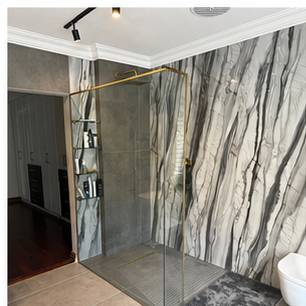
Fewer joints do not mean less work
Large-format panels can create a quiet, high-end shower wall with fewer grout lines. The reduction in joints is visible; the preparation required to achieve it is not.
The actual panel needs to be inspected, measured, cut, transported and installed without damaging its edges, corners or focal veining.
The wall must be ready before the panel arrives
Large panels do not flatten a badly prepared wall. The substrate needs to be sound, suitably flat, compatible with the waterproofing and ready for the selected bonding system.
Mixer bodies, shower outlets, niches, shelves and glass junctions must be coordinated before fabrication. A hole cut in the wrong place is a costly problem, not a minor tile adjustment.
Handling is part of the installation
Large slabs may require multiple installers and suction lifting equipment. The delivery route, temporary support, storage position and protection of the panel all need planning. Natural fissures, cut-outs and edges deserve particular care.
The bonding system also depends on the exact material. Pale stone, moisture-sensitive stone and resin- or mesh-backed panels may require different technical solutions.
Waterproofing remains beneath the finish
The slab is not the wet-area membrane. Corners, penetrations, wastes and changes of plane must be waterproofed independently, then the panel is installed as the specified finish.
That is why large-format bathroom work belongs in the renovation sequence from the beginning rather than being treated as a decorative upgrade at the end.
See the Signature Bathrooms renovation process at our renovation process.
Continue planning your renovation
For a related question, continue with related bathroom renovation guidance.