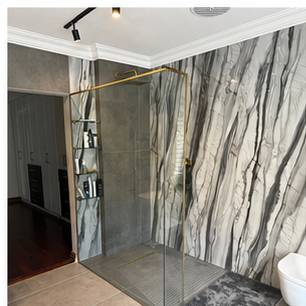
A hollow sound is a clue, not a complete diagnosis
When a bathroom tile sounds hollow or begins to move, the cause may be poor adhesive contact, an uneven or contaminated substrate, movement, moisture, an unsuitable adhesive or a failure in the surrounding construction.
The correct repair depends on why the tile failed. Replacing one tile without checking the surrounding area can leave the same problem underneath the next finish.
Adhesive coverage matters
Tile adhesive needs to be applied to a suitable substrate and used within the manufacturer’s working instructions. Large-format tiles require particularly careful handling and coverage. A few dabs of adhesive may hold a tile temporarily but leave unsupported areas that can crack or move.
The substrate must also be sound, clean, flat enough for the selected tile and compatible with the adhesive system. Adhesive cannot reliably correct a weak or moving wall.
Moisture may be part of the failure
In a shower, loose tiles can be associated with water entering behind the finish, failed waterproofing, open joints or movement at a change of plane. The tile itself is not the waterproofing layer.
If there is damp outside the shower, recurring mould, staining or a persistent smell, the investigation needs to go beyond the loose tile.
Why simply adding grout rarely solves it
Grout can fill a joint, but it does not bond a moving tile back to a failing substrate or repair a wet-area system. A cosmetic repair may look acceptable for a short time while the underlying cause continues.
For a premium renovation, the important question is not only how to replace the visible tile. It is whether the surface beneath it is ready to receive a reliable new finish.
See the Signature Bathrooms renovation approach at Durban bathroom renovations.
Continue planning your renovation
Signature Bathrooms coordinates the design and construction details as one renovation scope. See the bathroom renovation service and continue with related bathroom renovation guidance.