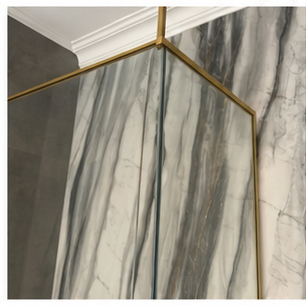
Low-iron shower glass is manufactured to reduce the green cast associated with ordinary float glass. It can be a beautiful upgrade, especially beside white stone, pale porcelain or carefully matched brass. It is not automatically worth the extra cost in every enclosure.
Where the difference is most visible
The colour shift is easier to notice in thick glass, along exposed edges and where the shower sits against a light, neutral wall. It may be less noticeable in a heavily framed enclosure, a darker bathroom or a design with strong tinted or reeded glass.
It does not solve every visual problem
Low-iron glass will not correct a crooked wall, poor silicone line, cloudy surface or badly positioned hardware. It also does not make the glass maintenance-free. The final appearance still depends on the entire enclosure and the room’s lighting.
Compare the actual sample
Ask to see the selected glass beside the tile, stone and hardware under the proposed lighting. Online images and small showroom samples may hide the difference between a clear low-iron panel and a standard panel.
Consider privacy and serviceability
If the room needs privacy, a patterned, satin, reeded or tinted option may be more appropriate than paying for maximum optical clarity. Confirm how the chosen surface is cleaned and whether the hardware and seals remain available locally.
Specify the glass as part of the enclosure
The decision should include safety glazing, thickness, edge quality, hardware, coatings, maintenance and replacement, alongside the glass colour. Low-iron is a useful tool when it supports the design.
Read about why premium mirrors can look less green, or compare frameless, semi-frameless and framed showers.