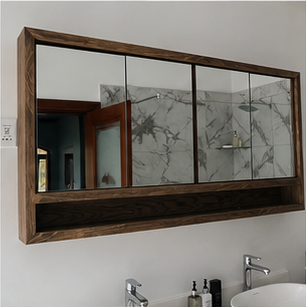
Blackening around the edge of a bathroom mirror is commonly described as silvering failure. The dark mark is not simply a dirty surface that can be polished away. It can indicate that moisture or chemicals have reached the backing or edge of the mirror.
The edge is the vulnerable zone
The face of a mirror is protected by the glass, but the perimeter and rear coating require proper handling. Water sitting along an edge, damp behind the mirror, aggressive cleaning or an unsuitable installation method can contribute to deterioration.
The exact cause needs to be assessed from the mirror, wall and bathroom conditions.
Installation can create the problem
A mirror fixed too close to a wet surface, sealed incorrectly, or installed against a damp or uneven wall may be exposed to conditions it was not designed to tolerate. The adhesive must be compatible with the mirror backing; not every silicone or construction adhesive is suitable.
The wall behind it matters as much as the glass in front.
Coastal humidity adds to the environment
Durban and KZN bathrooms can experience high humidity, especially where extraction and replacement air are poor. A mirror can show the consequences of a ventilation problem even though it is not the source of that problem.
A better mirror specification
Choose suitable mirror glass, protect the backing and edges during handling, use a compatible installation system and keep the room ventilated. The mirror should also be cleaned with products appropriate to the surface and frame.
Read how Durban humidity affects bathroom finishes, or see why bathroom ventilation still matters.