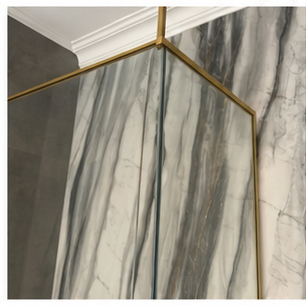
Shower glass is installed at the boundary between a wet area and the rest of the bathroom. Its hinges, clamps and stabiliser bars may need to pass through tile and into the wall, so the fixing detail must be considered alongside waterproofing rather than after it.
The waterproofing layer is not the tile
The visible tile is only the finish. Behind it may be a membrane, screed, plaster or board system that protects the structure. A penetration that is drilled without understanding this build-up can create a path for water.
Fixing positions should be known early
The final glass size may be measured after the finishes, but the intended fixing zones should be shown earlier. This allows backing, waterproofing details and tile layouts to be prepared for the hardware that will actually be used.
Sealant is not a universal repair
A bead of silicone can be part of a correct detail, but it should not be used to disguise a weak fixing, unsupported wall or damaged waterproofing. The sealant must also be compatible with the glass, backing, metal finish and adjacent materials.
Keep water out of the hardware interface
The enclosure should be designed so that water is directed away from vulnerable penetrations and does not remain trapped behind clamps or channels. The shower head and body sprays should also be positioned so they do not drive water directly toward the door gap.
Record the installation
A handover record should identify the glass product, hardware, sealants and maintenance requirements. This is useful when a hinge, seal or panel eventually needs attention.
Read about what sits beneath a waterproofed shower, or see why multiple shower outlets affect water pressure.