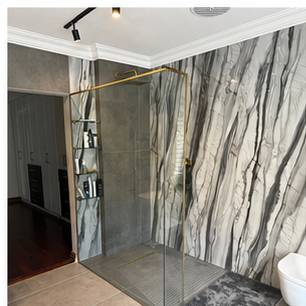
Tile is not only identified by its colour and collection name. Boxes may also carry information about batch, shade, calibre or production details. Those details become valuable when the same tile needs to be sourced later.
Why a later box may look different
Tiles are manufactured in production runs. Even where the product name remains the same, shade and calibration can vary within the manufacturer’s stated range. A replacement box from a later run may not disappear into an existing wall as easily as the original material.
This is particularly noticeable with marble-look porcelain, patterned surfaces and large installations where several pieces are read together.
Record the material before the boxes disappear
At handover, the homeowner should keep the product name, size, finish, colour, batch or shade information and supplier details. A photograph of the box label is often a simple way to preserve the information.
The same record can include the grout colour, waterproofing system, adhesive used where relevant and the location of any spare tiles.
Spare material is more useful with its identity attached
A loose spare tile in a garage is not much help if nobody knows which bathroom it belongs to. The record should say whether the tile is for a shower wall, floor, vanity panel or another elevation, and whether it has a directional pattern.
That small amount of documentation can save a future owner from dismantling a good section of a bathroom to find a matching repair.
Handover is part of quality
A luxury bathroom should be handed over as a maintainable room, not only as a finished photograph. Product records, spare material and care instructions help protect the result after the renovation team has left.
Read about what a premium bathroom handover should include, or continue with why keeping spare tile matters.