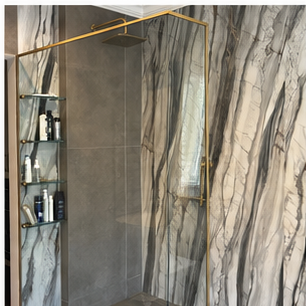
Glass does not retain water by itself. The shower head, hand shower, body sprays, door gap, screen length and floor fall determine where water travels. This is why the enclosure should be designed with the plumbing layout rather than measured as a separate decorative item.
Direct spray is the first risk
If a rain head or body spray points toward a door gap, water will test that gap repeatedly. A longer seal will not solve a fundamentally poor spray direction. The outlet position, user position and glass line should be reviewed together.
Walk-in screens need more planning
An open screen has no closing door to contain spray. Its width, return panel, entry direction and shower head position must create a workable dry zone. In some rooms, changing the shower outlet is more effective than adding a larger piece of glass.
Multiple outlets change the water path
A hand shower, rain head and body sprays may direct water in different directions. The system’s flow and pressure also affect how aggressively water reaches the enclosure edge. That should be tested or considered before the final glass is ordered.
Glass cannot correct the floor
The floor fall and drain position need to return water to the waste. A screen may reduce splash but it cannot correct standing water, a badly positioned waste or an incorrect finished threshold.
Design the complete wet zone
Draw the shower outlet, user, glass, door swing, niche, bench, floor fall and waste together. This is how a frameless enclosure remains visually light without becoming a daily source of water outside the shower.
Read about why walk-in showers can flood, or see how multiple shower outlets affect pressure.