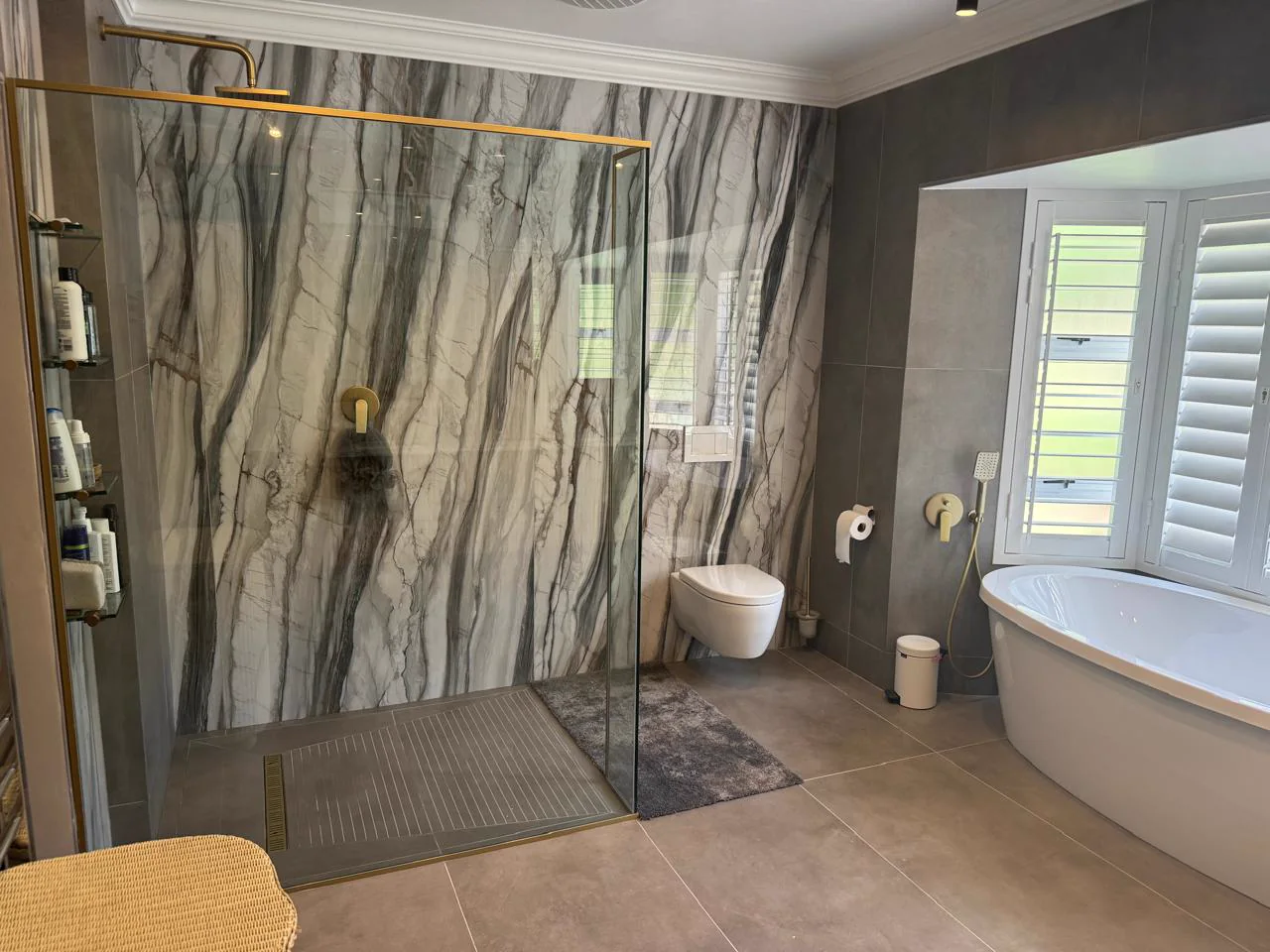
Backlit onyx is engineered, not simply illuminated
Onyx can transmit light through parts of the stone, creating a dramatic feature wall or vanity. The result depends on the actual slab, the light source, the diffusion layer, the support frame and the access arrangement behind it.
A product photograph cannot prove how a particular slab will respond when lit. The selected material should be tested with the intended lighting before final fabrication.
Start with a translucency test
Different sections of the same slab may transmit light differently. Dark inclusions, veins, thickness changes and reinforcement can affect the final result. A mock-up helps identify LED hot spots, dark seams, uneven brightness and unwanted light leakage.
The design should also settle the colour temperature and dimming behaviour. Warm light can produce a very different effect from a cooler source, especially through gold, cream, green or blue-toned onyx.
Build the lightbox behind the stone
The structure needs a stable support, a consistent light distribution and room for the driver or power components to be serviced. The stone should not be treated as a thin decorative sheet with inaccessible wiring hidden behind it.
If the feature is in or near a wet area, waterproofing remains an independent construction requirement. The lighting system does not replace the membrane, correct corners, pipe collars or sealed penetrations.
Onyx needs a realistic care plan
Decorative calcite onyx is generally softer and more acid-sensitive than many clients expect. It should be protected from harsh cleaners, scratching and careless storage of products on the finished surface.
The result can be exceptional, but the material should be specified for a location where its fragility and maintenance requirements are appropriate.
See the Signature Bathrooms renovation approach at Durban bathroom renovations.
Related renovation guidance
For the wider project context, continue with related bathroom renovation guidance.