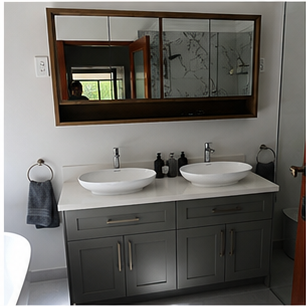
An illuminated smart mirror may contain LED drivers, demister controls, sensors, switches, speakers or internal sockets. These features can make the bathroom more useful, but they also create a service question that should be answered before the mirror is permanently installed.
Electronics are replaceable parts
Even a well-made LED system may eventually need diagnosis or a component replacement. If the driver is buried behind a tiled wall or fixed where it cannot be reached, a small electrical issue can become a large removal job.
Replaceable components and a clear service route are signs of a better specification.
The mirror should not be designed as a sealed mystery
Record the product, driver location, wiring route, control type and any relevant part numbers. The information belongs in the bathroom handover records alongside taps, cartridges, grout and spare tile.
This is especially important where the mirror is custom-made or the supplier may change ranges.
Service access affects the wall design
The mirror, cabinet, tile joints, socket, switch and driver should be coordinated before the wall is closed. A recessed cabinet may allow a different access strategy from a bonded full-wall mirror.
The electrician must complete the electrical work in accordance with the relevant requirements.
Smart is only premium when it remains usable
Touch controls, hand-wave sensors, colour adjustment and demisters are valuable when they work reliably and can be maintained. A plain mirror with excellent light may be the better choice than a feature-heavy mirror that cannot be serviced.
Read more about mirror cabinets and practical luxury, or see what belongs in a premium bathroom handover.