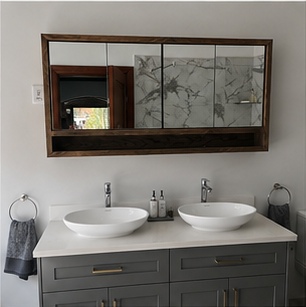
A mirror TV or connected smart mirror can make a luxury bathroom feel highly considered, but the technology should disappear into the design. That requires more than placing a screen behind reflective glass. Viewing angle, mirror tint, room light, ventilation, electrical provision and future access all need to be resolved together.
Reflection and image quality are linked
The mirror finish affects both the reflection and the screen image. A darker or more reflective glass may improve the appearance of the screen in some conditions while making the mirror less useful when the display is off. Ask to see the actual product in both modes before specifying it.
Plan the viewing position
A screen above a vanity is not automatically comfortable to watch. The mirror height, user position, glare from windows and the angle of the display all matter. In a guest WC, a smaller discreet screen may be more successful than a large feature that dominates the room.
Moisture is not just a waterproofing issue
The electrical product must be selected for its intended bathroom location and installed in accordance with the manufacturer’s requirements and applicable electrical rules. A mirror TV is not made safe merely because its front surface is sealed.
Provide service access
Screens, drivers, power supplies, controls and connectivity can fail or become outdated. The installation should allow a qualified technician to reach the relevant components without destroying finished tile, stone or cabinetry. A hidden technology feature that cannot be serviced is not a premium detail.
Decide whether the feature earns its space
The best luxury bathrooms use technology where it improves the experience. If the screen is rarely used, a high-quality illuminated mirror, better task lighting or concealed storage may provide more lasting value. The decision should follow the room’s purpose rather than the availability of a gadget.
Read why smart-mirror service access matters, or see how to plan bathroom electrical work around an LED mirror.