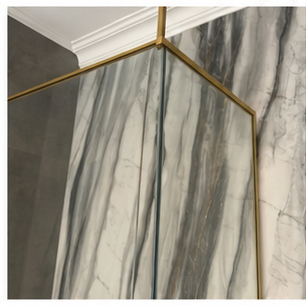
Shower glass is exposed to impact, movement and water every day. In South Africa it should be treated as safety glazing, with the correct product, permanent identification and installation method. The glass may look clear and simple, but the safety requirement sits behind the appearance.
Toughened glass is not ordinary glass
Toughened safety glass is processed so that, if it breaks, it fragments differently from ordinary annealed glass. That does not make it unbreakable, and it does not excuse poor handling, incorrect drilling or unsupported panels.
All holes, notches and cut-outs must be completed before the glass is toughened. A site team cannot safely drill a new hinge hole into a finished toughened panel because a measurement was missed.
Look for permanent identification
The glass should have a permanent mark or other accepted identification showing what product it is and which standard or certification applies. Do not rely only on a verbal assurance that the glass is “safety glass”. Keep the supplier’s compliance documentation with the project record.
The assembly must also be safe
Correct glass alone does not make a safe enclosure. Hinges, clamps, channels, stabiliser bars, wall fixings and the surrounding substrate all carry load. The panel must be designed for the hardware and the hardware for the glass thickness.
Ask before installation
Confirm the glass type, thickness, safety marking, supplier documentation, hardware compatibility and final measurement process. A premium bathroom deserves a traceable product record, especially if the enclosure is custom-made.
This is general information, not a substitute for the current applicable South African standard or professional glazing advice. The exact requirements should be verified for the selected product and installation.
Read about why shower-glass measurement happens late, or see the frameless shower enclosure planning guide.