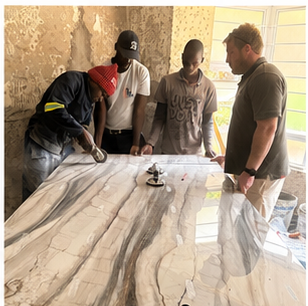
A 6 mm porcelain slab can look light and elegant, but light does not mean simple. Thin-format material has to be transported, supported, cut and fixed according to the actual manufacturer’s system.
Thin does not mean flexible
Large pieces remain vulnerable to bending, point loads and unsupported movement during handling. A slab can be strong when fully supported and much less forgiving while it is being carried around a staircase or positioned against a wall.
The handling plan should be decided before delivery.
Cutting and penetrations need control
Mixer outlets, sockets, niches, basin openings and corners create stress points. The location, size and edge treatment of each cut-out should be coordinated with the product thickness and the support behind it.
A rushed cut or an unsupported edge can turn an attractive material into an expensive replacement.
The substrate remains critical
Thin porcelain follows the surface and depends on proper contact. The wall or floor must be prepared to the required flatness, the adhesive system must suit the product and coverage must be controlled.
The slab cannot be expected to bridge a badly prepared wall simply because it is a premium material.
A lighter material still needs a complete method
Before specifying thin porcelain, confirm product data, handling equipment, access, fabrication, support, adhesive and installation requirements. The thinner profile may be an advantage, but only when the whole system is designed for it.
Read why a large porcelain slab is also an access decision, or see why large tiles need straighter walls.