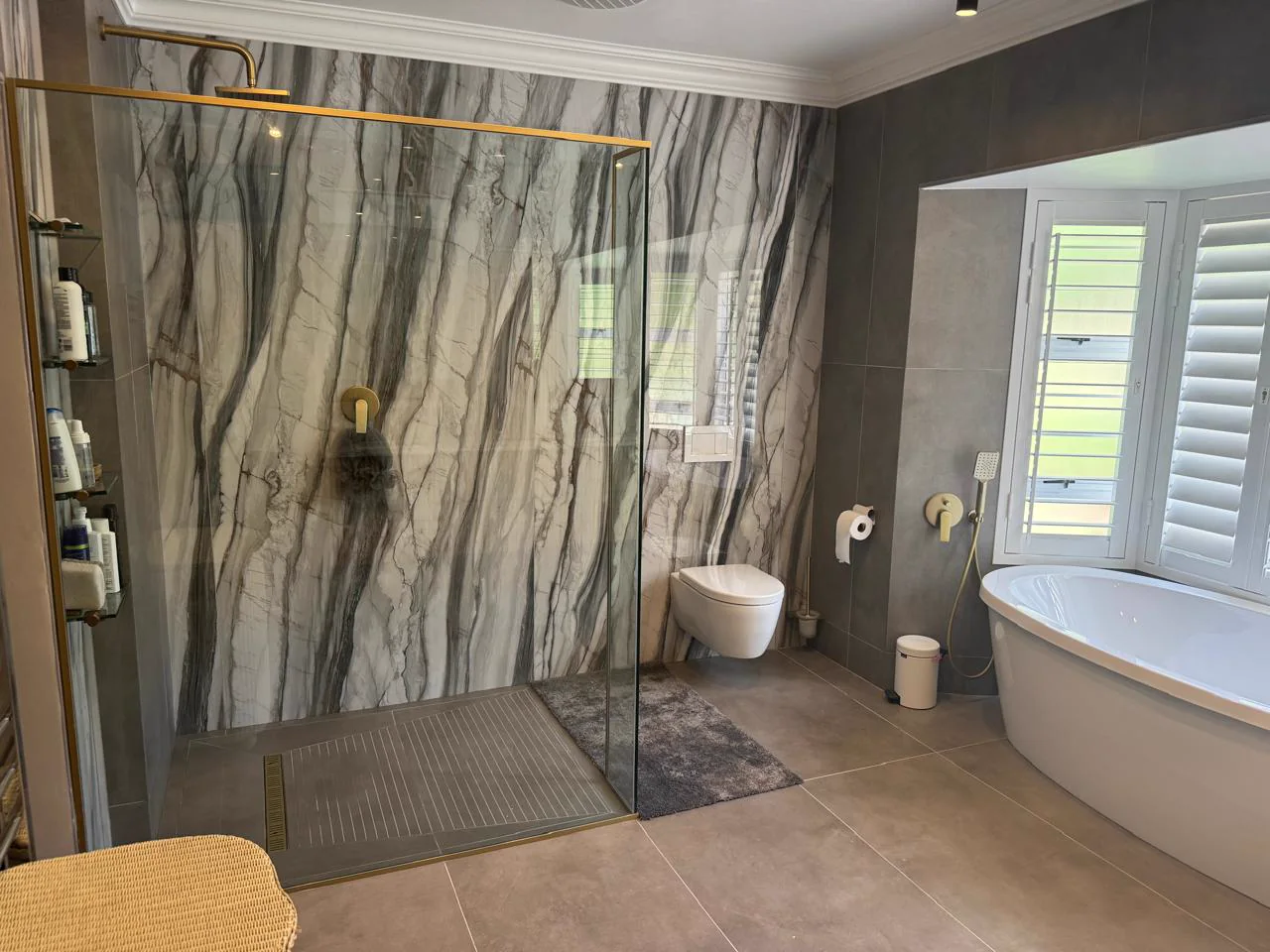
Stone-look porcelain can give a bathroom the visual language of marble, travertine or limestone while offering a manufactured format with repeatable dimensions and a broad range of finishes. That does not make it fake stone or a universal replacement for natural material.
The differences are useful
Porcelain can offer consistent thickness, large printed faces and finishes designed for particular applications. Natural stone has geological variation, translucency, porosity and a surface that may change with sealing and use.
The right decision depends on the homeowner’s priorities, the room and the maintenance they are prepared to accept.
Printed movement still needs layout
High-quality digital printing can create convincing veining, but the range has faces, shade variation, direction and repeat. A large wall should still be laid out before fixing so the visual movement is controlled.
Natural stone also needs layout; neither material removes the need for design.
Technical suitability remains product-specific
The porcelain’s finish, absorption, size, thickness, wet-use information and cleaning guidance should be checked for the intended area. A polished wall product is not automatically the right shower floor, and a stone-look product is not the waterproofing layer.
Choose honestly
Porcelain may be the better answer when consistency, availability and maintenance are important. Natural stone may be the better answer when the homeowner values geological variation and is prepared for its care. Both can be luxurious when specified and installed properly.
Read natural stone versus sintered stone, or compare marble-look porcelain with actual marble selection.