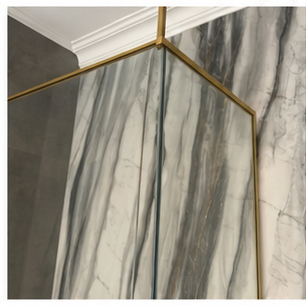
Every hinge hole, handle hole, corner notch and hardware cut-out changes the shower-glass panel. These details must be designed and manufactured before toughening. Once the glass has been processed, a missing hole is not a small site adjustment; it can mean remaking the panel.
Hardware determines the glass
The hinge, clamp, handle and seal system must be selected before the glass is ordered. Different hardware has different hole sizes, edge distances, glass thicknesses and clearances. A panel that fits one hinge may not suit another.
Why site drilling is not a shortcut
Toughened glass cannot be treated like a tile or a sheet of ordinary glass. Attempting to drill it on site can cause sudden breakage and creates a serious safety risk. It also suggests that the enclosure was measured or specified too late.
The finished opening still needs checking
The fact that cut-outs are made before toughening does not mean the glass should be measured before the room is ready. Final wall plumb, tile thickness, floor level, stone edges and the actual opening affect the panel dimensions.
Set-out is the hidden work
The enclosure should be drawn with the glass lines, hinge centres, door swing, handle position, seals and stabiliser components. This reveals conflicts with niches, taps, shower heads and towel rails before manufacture.
A good process saves material
Accurate templates, a confirmed hardware schedule and a late site measure reduce remakes. They also protect the visual quality of a frameless enclosure, where a few millimetres can change the gaps and alignment dramatically.
Read about why final shower-glass measurement happens late, or see how glass hardware affects the enclosure.