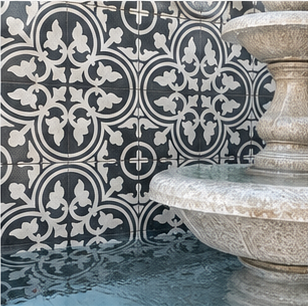
A three-dimensional wall tile can give a bathroom depth without relying on a loud colour. Its relief catches light and creates movement across a surface that would otherwise be flat.
That same relief changes how the wall has to be planned and maintained.
Light reveals the shape
A light placed close to a textured wall can exaggerate every ridge and hollow. This can be beautiful when the effect is intended, but harsh downlights may also create shadows that make the wall appear busier than expected.
The tile sample should be viewed under the proposed lighting, not only in a bright showroom.
The wall still needs a disciplined layout
A sculptural tile may have a direction, repeat or edge condition. Cuts around a niche, mirror, basin or corner can interrupt the relief. The layout should show where the pattern starts and stops before fixing begins.
A quiet surrounding material often gives the feature enough room to work. Adding texture to every surface can make the bathroom feel visually crowded.
Maintenance is part of the decision
The deeper the relief, the more attention the surface may need during cleaning. Soap residue, dust and moisture can collect differently from a flat porcelain wall. The chosen product’s cleaning guidance should be understood before it is used inside a wet area.
Decorative tile is most successful when its beauty and maintenance demands are both accepted.
Use relief deliberately
A 3D wall tile can define a vanity wall, powder room, bath elevation or selected shower surface. It should be coordinated with the light, fittings, grout and surrounding tile so the texture reads as architecture rather than decoration added at the end.
That is the difference between an interesting tile and a resolved bathroom.
Continue with how wallpaper-style porcelain changes a bathroom wall, or explore functional zoning in a luxury Durban bathroom.