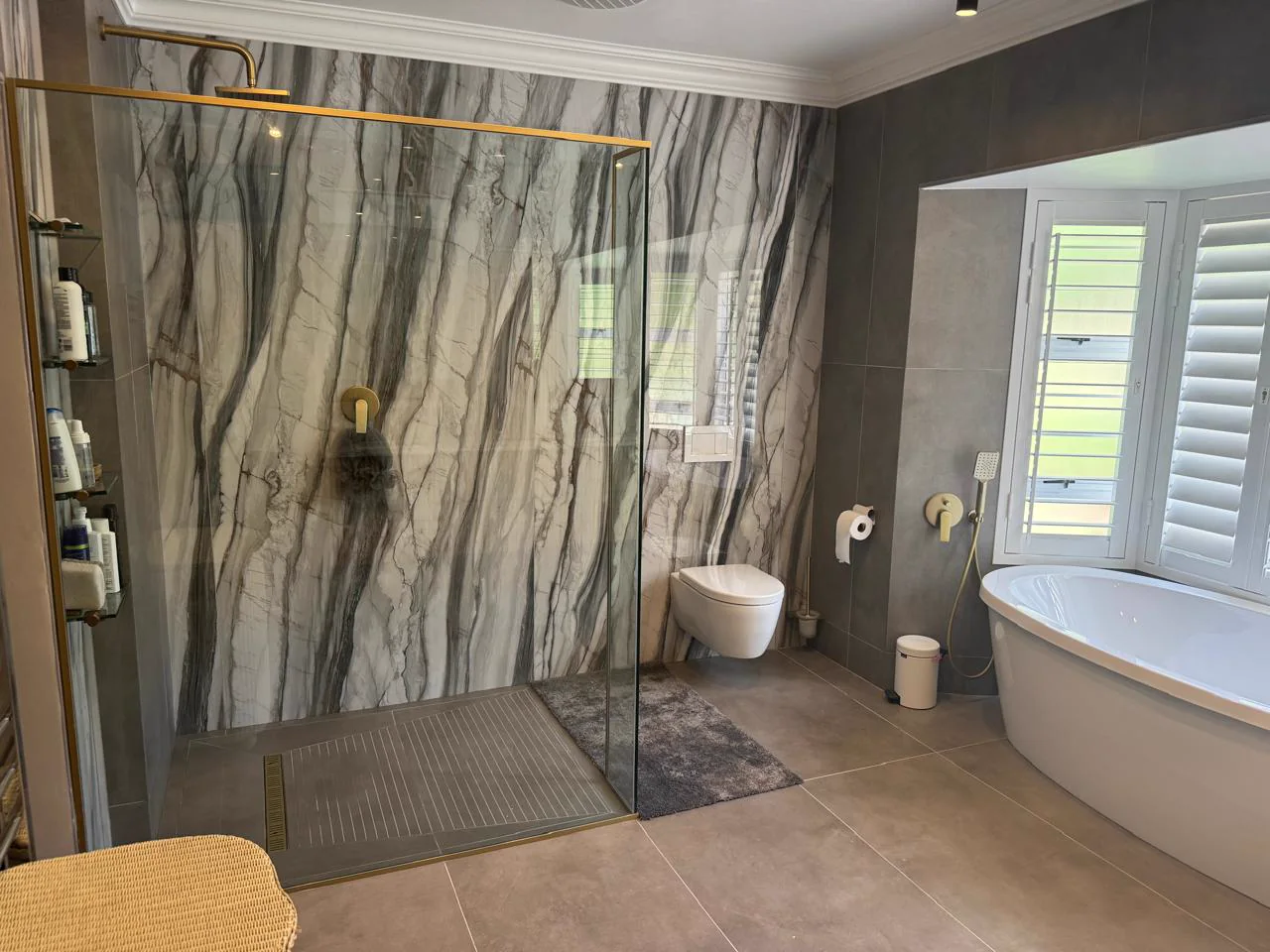
Choose the material, not just the pattern
Quartzite and marble are both used for premium bathroom surfaces, and some slabs can look surprisingly similar. They are not interchangeable materials. Their hardness, absorption, chemical sensitivity, movement and fabrication requirements can differ.
The right comparison begins with the intended location and the way the bathroom will be used.
Marble brings softness and movement
Marble can offer dramatic veining, a soft depth and a wide range of colours. Many marbles are calcium-based, which means acidic cleaners can etch the surface. Sealing may help with staining but does not make the material acid-proof.
Marble can be a beautiful choice where the client understands its character and maintenance needs.
Quartzite can offer a different balance
True quartzite is formed from quartz-rich sandstone and can be hard and durable, although the exact slab still needs to be verified. Trade names and commercial classifications are not always consistent, so the material should not be specified from a colour name alone.
Some quartzites may still need sealing, can contain natural fissures and can vary in fabrication behaviour. “Harder than marble” does not mean “indestructible”.
Compare the technical details
Before choosing, inspect the actual slab and ask about absorption, finish, resin repairs, mesh backing, edge fabrication, sealing, cleaning and suitability for the proposed application. A shower floor, vanity top, shower wall and backlit feature each create different demands.
The stone should also be checked against the waterproofing, adhesive and substrate system. A premium material deserves a product-specific specification.
In KZN, the best luxury surface is the one whose appearance, installation method and maintenance routine all fit the client’s expectations.
Read more about Signature Bathrooms at our renovation process.
Continue planning your renovation
For a related question, continue with related bathroom renovation guidance.