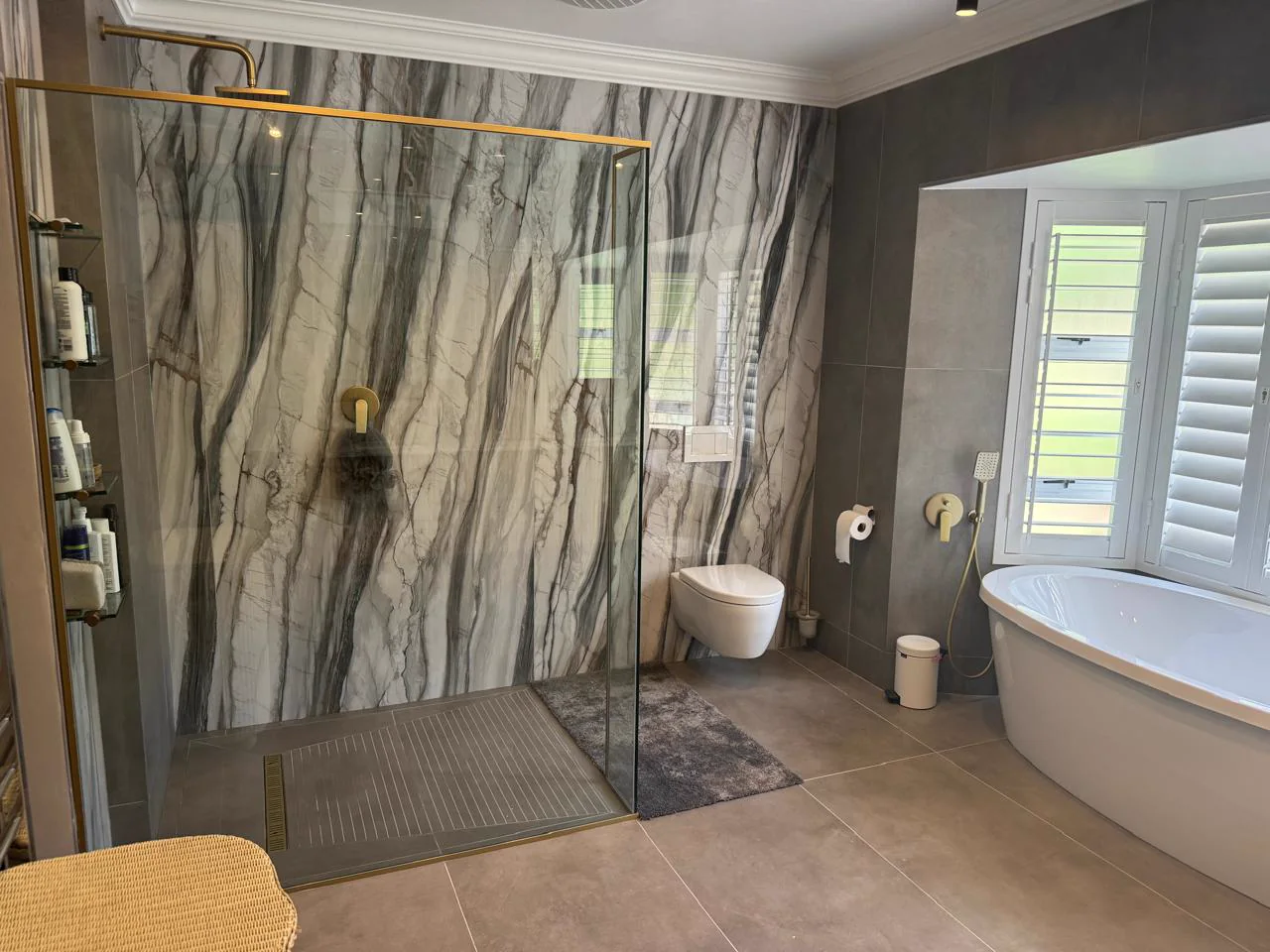
Shade variation is one of the details that can be missed when a tile is selected from a single sample. A rating such as V3 is intended to describe the variation a homeowner may see between pieces in the range.
Variation is part of the design
Some tile ranges aim for a very uniform appearance. Others are deliberately made to resemble natural stone, timber, concrete or handmade surfaces, where each piece may be different.
Neither approach is automatically better. The important thing is knowing which visual behaviour the room is going to receive.
One sample cannot show a full V3 wall
With a variation range, the installer needs to open and view enough material to plan the balance of light, dark, quiet and highly marked pieces. A single showroom tile may show the colour family without showing the full spread of the collection.
This matters around niches, mirrors, corners and focal walls where one unusually dark or busy piece may become the dominant feature.
Layout is part of the product
Variation should not be left entirely to chance. A dry layout allows the team to check how the faces work together, whether the movement feels natural and where cuts will land. This is especially valuable with large-format marble-look porcelain.
The rating describes the range. The layout determines how that range is experienced in the room.
Ask what the rating actually describes
Technical terms should be read with the manufacturer’s product information and visual samples. Shade variation is not the same as slip resistance, wear rating or surface finish. Each answers a different question.
Read why tile-face numbers matter, or see why a tile sample is not the full bathroom.