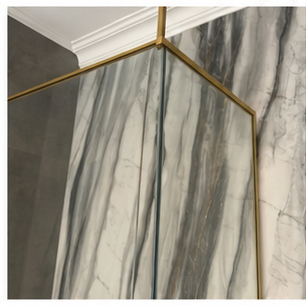
A frameless glass shower enclosure is one of the most consistent requests in Durban and North Coast bathroom renovations. It opens the room visually, is easier to clean than a framed aluminium alternative, and integrates cleanly with almost any tile and sanitaryware selection.
But frameless shower glass involves more decisions than most homeowners expect when they first raise it. The enclosure cannot be ordered until the layout is fixed, the layout cannot be finalised until the waterproofing is resolved, and the waterproofing depends on the substrate and structure of the specific room. Everything connects.
Frameless vs semi-frameless vs framed: the practical differences
Frameless: structural glass with no aluminium perimeter frame. Hardware is minimal — wall-mounted hinges, a handle, and a U-channel or point-fixed base. Visually clean. The glass must be thick enough to be structurally self-supporting.
Semi-frameless: glass panels with a partial aluminium perimeter — typically the bottom channel and one vertical edge — but no full surround. Less glass thickness required than fully frameless. More visible hardware than frameless.
Framed: aluminium frame on all edges. The most tolerant of imperfect walls and uneven floors. Easier to seal but carries a visible frame profile that some homeowners find dated.
For most renovations in Durban, Umhlanga and the North Coast, frameless is the preferred choice where the budget and space allow for it. Semi-frameless is a reasonable middle ground. Framed is typically reserved for budget-sensitive projects or where wall squareness makes frameless impractical.
Glass thickness and safety
Frameless shower enclosures in South Africa must use tempered (toughened) safety glass. SANS 1263 sets the minimum requirements for glass in wet rooms. For frameless applications, 10mm tempered glass is the standard minimum thickness for panels up to approximately 900mm wide. Fixed panels exceeding that width, or doors with long free-hanging edges, may require 12mm.
Thicker glass is noticeably heavier. Hinges and fittings must be rated for the door weight. A frameless door that is not properly hinged will sag over time, causing alignment problems and seal failure.
Layout decisions that affect the glass order
The glass company measures and fabricates to the exact dimensions of the completed shower space. This means the glass cannot be ordered until:
- The shower tray or wet area base is fully waterproofed and tiled
- The shower walls are tiled to full height
- All corners and returns are at the final dimension
Any change to the tile layout, the grout joint width, or the wall return after the glass is measured requires either a new set of glass or adjustment of the opening — both of which add cost and delay.
Agree on the exact shower layout — including the door swing direction, the entry point, and the position of any fixed panels — before waterproofing begins. This allows the tiler to finish the space to the correct dimensions on the first attempt.
Door swing and entry position
In a corner shower, the door is typically on one of the two short walls or in the corner. The swing direction determines which side the handle and hinges are on, and whether the door opens into the shower or into the bathroom.
A door that swings into the bathroom requires sufficient clear floor space in front of it. In a compact bathroom, an inward-swinging door or a sliding panel may be more practical. Sliding frameless glass is available and performs well, but the floor channel accumulates water and requires more maintenance than a hinged option.
Waterproofing: the critical step before glass
No frameless glass enclosure performs well over a poorly waterproofed substrate. KwaZulu-Natal’s humidity means that water vapour in a bathroom is high even outside the shower, and any failure in the waterproofing membrane behind tiles leads to tile delamination, grout failure and structural damage to walls and floor.
The waterproofing membrane must be applied to the floor and the walls to at least 200mm above the tile height, fully cured, and checked before tiling begins. This is not a step that can be rushed. A bathroom that is re-tiled two years later because of waterproofing failure costs more in total than a properly executed original renovation.
Our approach at Signature Bathrooms treats waterproofing as a non-negotiable — not a step that gets abbreviated to save programme time.
Hardware and finish selection
Frameless glass hardware — hinges, handles, U-channels and brackets — is typically available in chrome, brushed nickel, matte black and brushed gold. The hardware finish should coordinate with the brassware selection for the basin and bath.
In coastal areas, the salt air over time affects some hardware finishes more than others. Matte black powder coat is generally more resistant to salt corrosion than polished chrome in positions directly exposed to outdoor air ingress. For properties within 500 metres of the ocean, specify hardware with this in mind.
View examples in our portfolio or contact Signature Bathrooms to discuss your shower enclosure as part of a full bathroom renovation in Durban, Umhlanga, Ballito or the Upper Highway. For an important installation detail, see our guide to final shower-glass measurement.