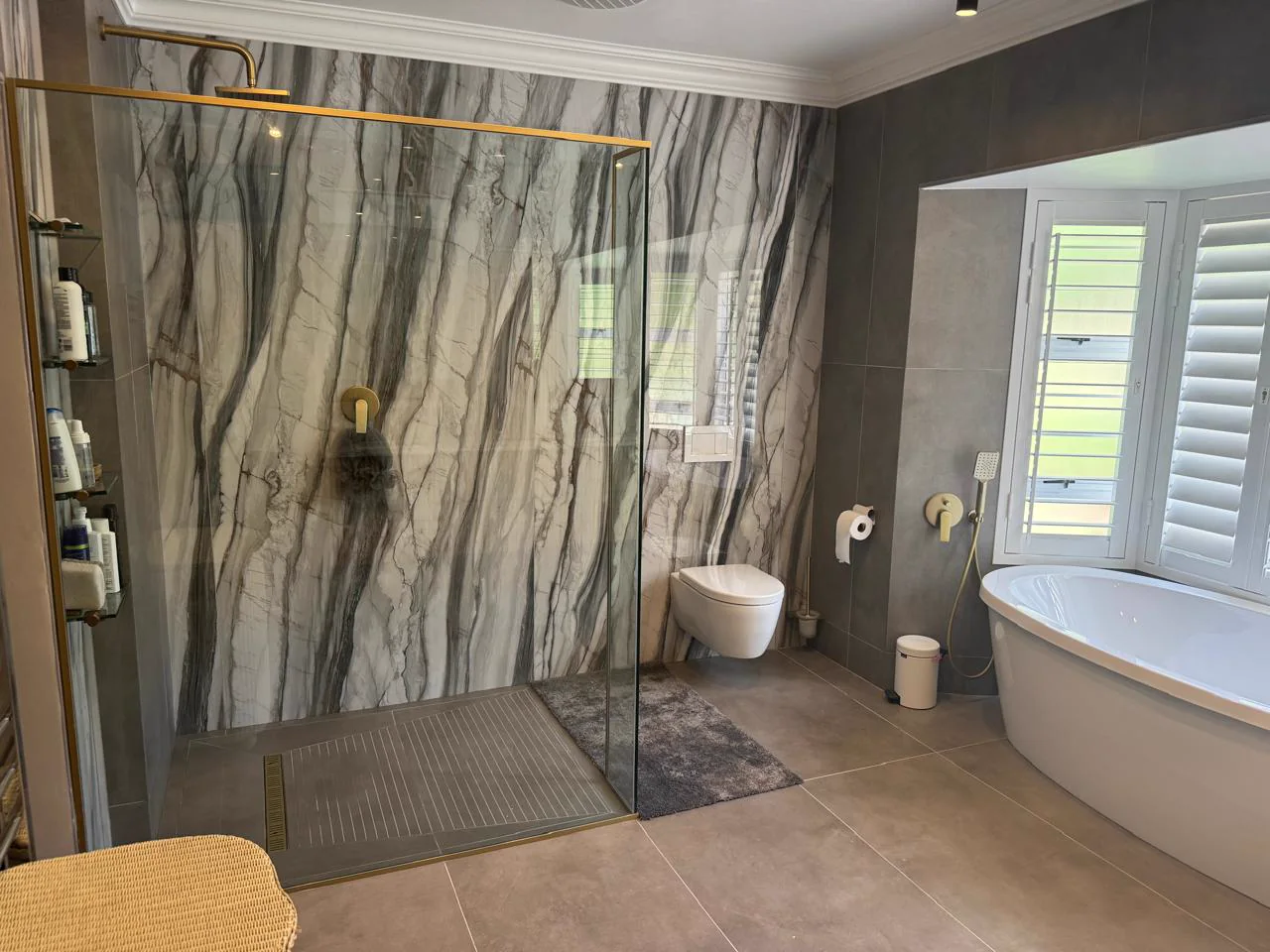
The front of the slab is not the whole product
A marble, onyx or other stone panel may have mesh, resin or another reinforcement on its rear face. This can help with handling or strength, but it can also affect the bond between the slab and the adhesive.
The rear face needs to be inspected before anyone assumes that a standard cement-based installation method will work.
Why the backing changes the installation
Adhesives bond to surfaces, not to the name of the stone. A resin or mesh treatment can reduce direct contact with the mineral surface, alter absorption and create a compatibility question for the chosen bonding system.
The exact product guidance should determine whether a suitable epoxy or other specialist method is required. The adhesive, stone and substrate should be considered together.
Large panels add handling and support risks
Reinforced stone can still be heavy and fragile. Suction lifting equipment, adequate labour, temporary support and a safe movement route should be planned before the slab arrives on site.
The finished wall also needs appropriate support. A bonding system is not a replacement for structural planning where a large panel, unusual overhang or suspended detail is involved.
Waterproofing must stay independent
Mesh or resin on the back of a slab does not waterproof the wall. The wet-area substrate, membrane, corners and penetrations still need their own compatible system.
Before fabrication, confirm the final wall build-up, stone thickness, cut-outs, service positions and glass junctions. The back of the stone is a technical surface, and it decides the bond.
See the Signature Bathrooms renovation approach at Durban bathroom renovations.
Continue planning your renovation
Signature Bathrooms coordinates the design and construction details as one renovation scope. See the bathroom renovation service and continue with related bathroom renovation guidance.