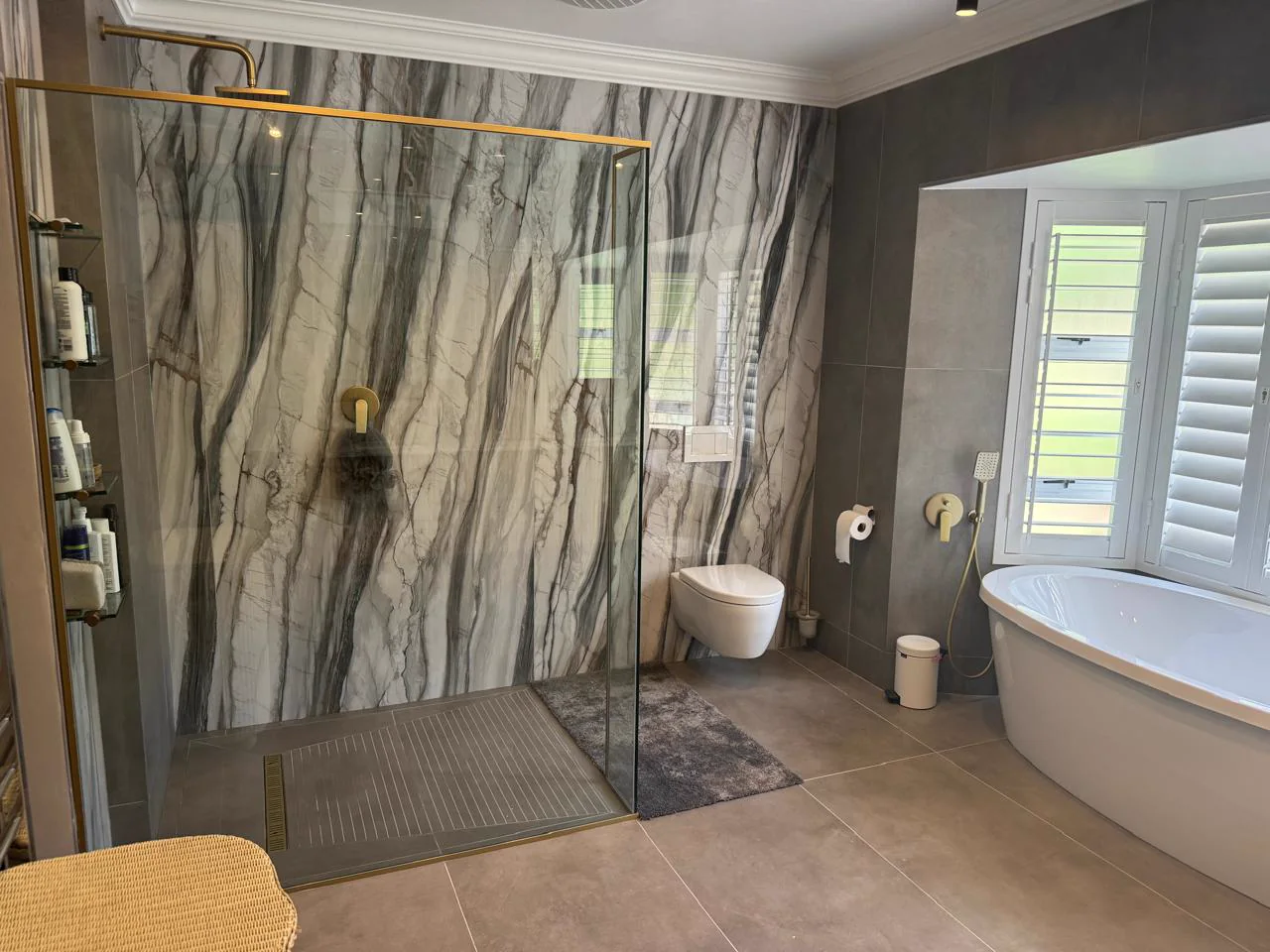
Porcelain and ceramic tiles can both be excellent bathroom materials, but the words should not be used as though they mean the same thing. Water absorption is one of the technical characteristics that helps distinguish tile types and applications.
The name is not enough
A tile product should be assessed from its technical documentation and intended use, not only from a showroom label. Body composition, water absorption, surface finish, strength, slip information and application all matter.
The right choice for a decorative dry wall may not be the right choice for a shower floor.
Porcelain still needs a suitable system
Lower absorption does not make porcelain a waterproofing layer. The substrate, adhesive, grout, movement details and waterproofing remain part of the installation. A porcelain tile can be technically suitable for an area while the wall or floor behind it is still poorly prepared.
The visible tile should never be asked to solve a hidden construction problem.
Finish and location change the decision
A polished tile, textured tile, mosaic or large slab may each have different guidance. Wet floors, shower walls, vanity walls and dry feature elevations should be considered separately. The same collection may offer different finishes for different uses.
This is why product selection should happen alongside the room layout and technical plan.
Read the actual product information
When comparing a premium tile, check the manufacturer’s data, application recommendations, cleaning guidance and available sizes. A local supplier is useful for discovery and availability, while the manufacturer’s documents should guide technical interpretation.
Porcelain can be an excellent choice for a luxury Durban bathroom, but the material is only one part of a successful installation.
Continue with how finish changes cleaning, or read why a shower floor is a drainage decision.