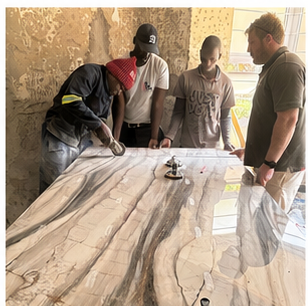
Natural stone is a material, not a maintenance-free finish
Marble, travertine, slate, limestone and other natural stones can create a bathroom with variation and depth that a manufactured surface may not reproduce. They also have different absorption, hardness, texture and chemical sensitivities.
The stone should be selected with its intended location and maintenance requirements in mind.
Sealing does not make stone indestructible
A suitable sealer can reduce staining and make routine care easier, but it does not turn every stone into a non-porous, acid-proof surface. The product and application method should suit the stone and the location.
Some stones require more regular attention than others. Wet floors, shower walls, vanity tops and splash areas may have different exposure patterns.
Cleaning products matter
Strong acids, abrasive powders and unsuitable bathroom chemicals can etch or dull natural stone. A cleaner that is safe for ceramic tile or glass may be unsuitable for a calcium-based stone.
Residue should be removed with the method recommended for the selected material. Hard water deposits should not be attacked aggressively without first confirming that the treatment is compatible with the stone.
Design around the material’s character
Natural variation, veining and small differences between slabs or tiles are part of the product. The layout should be reviewed before installation so the most visible areas receive a considered selection.
In humid coastal KZN homes, drying, ventilation and gentle care all contribute to the long-term appearance. The finish can remain beautiful, but it should be chosen with an honest understanding of what it needs.
See the Signature Bathrooms renovation approach at Durban bathroom renovations.
Continue planning your renovation
Signature Bathrooms coordinates the design and construction details as one renovation scope. See the bathroom renovation service and continue with related bathroom renovation guidance.