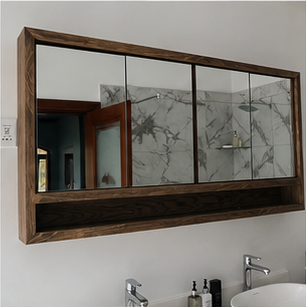
A mirror inside a shower can create an interesting architectural effect, especially in a dark stone or hotel-inspired bathroom. It is also one of the most demanding places to install mirror glass. Constant water, steam, cleaning chemicals and movement at the edges make the product and the installation detail critical.
Water changes the risk
A mirror that works well above a basin is exposed to much more moisture inside a shower. Water can remain on the lower edge, behind the perimeter or at a cut-out. Over time, that can damage the backing or create black-edge corrosion even when the front still looks clean.
The wall detail must remain waterproof
The mirror cannot be allowed to compromise the shower’s waterproofing. Any fixing, recess, trim or edge detail must be coordinated with the waterproofing system and the finished tile or stone. A decorative idea is not a reason to drill through a completed wet-area detail without a proper method.
Cleaning matters
Soap film, minerals and cleaning chemicals are more persistent in a shower. The mirror must be reachable without standing in an unsafe position, and the selected cleaning method must be compatible with the glass, coating, backing and frame.
Consider the alternative
Sometimes the same visual effect can be created with a mirror on the dry side of the glass, a mirrored cabinet outside the direct spray or a carefully placed reflective stone. These options may reduce maintenance while keeping the intended sense of depth.
Specify it as a system
If a shower mirror is genuinely appropriate, confirm the mirror construction, edge protection, fixing, waterproofing interface, ventilation and replacement plan before installation. This is not a standard mirror enlarged and placed in a wet zone.
Read why mirror edges should stay dry, or see what sits behind a properly waterproofed shower.