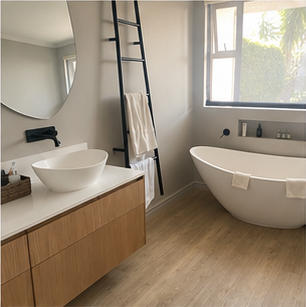
The shower door is a moving object in a room full of fixed objects. Before the glass is ordered, its swing should be checked against the bath, vanity, basin mixer, toilet, towel rail, wall and the person using the bathroom.
Draw the real arc
Show the finished door width, handle projection and full opening arc. A narrow-looking door can still strike a stone vanity once the handle and seal are included.
Think about entry and exit
The door should not block the normal route through the bathroom or force someone to reach around a hot tap. Where a hinged door cannot work comfortably, a pivot, sliding system, smaller panel or revised opening may be safer.
Keep cleaning access
The door should open far enough to clean the lower seal, hinge side and adjacent floor. A design that maximises glass but leaves an unreachable corner will be harder to maintain.
The final room is not the plan
Finished tile, stone, grout, skirting, handles and cabinetry can change clearances. The layout should be resolved early, but the glass must be measured against the completed surfaces.
Luxury is comfortable movement
The best enclosure disappears into the room because it opens smoothly, does not collide with other fittings and keeps water within the intended wet zone.
Read about pivot and wall-hinged shower doors, or see why final glass measurement happens after finishes.