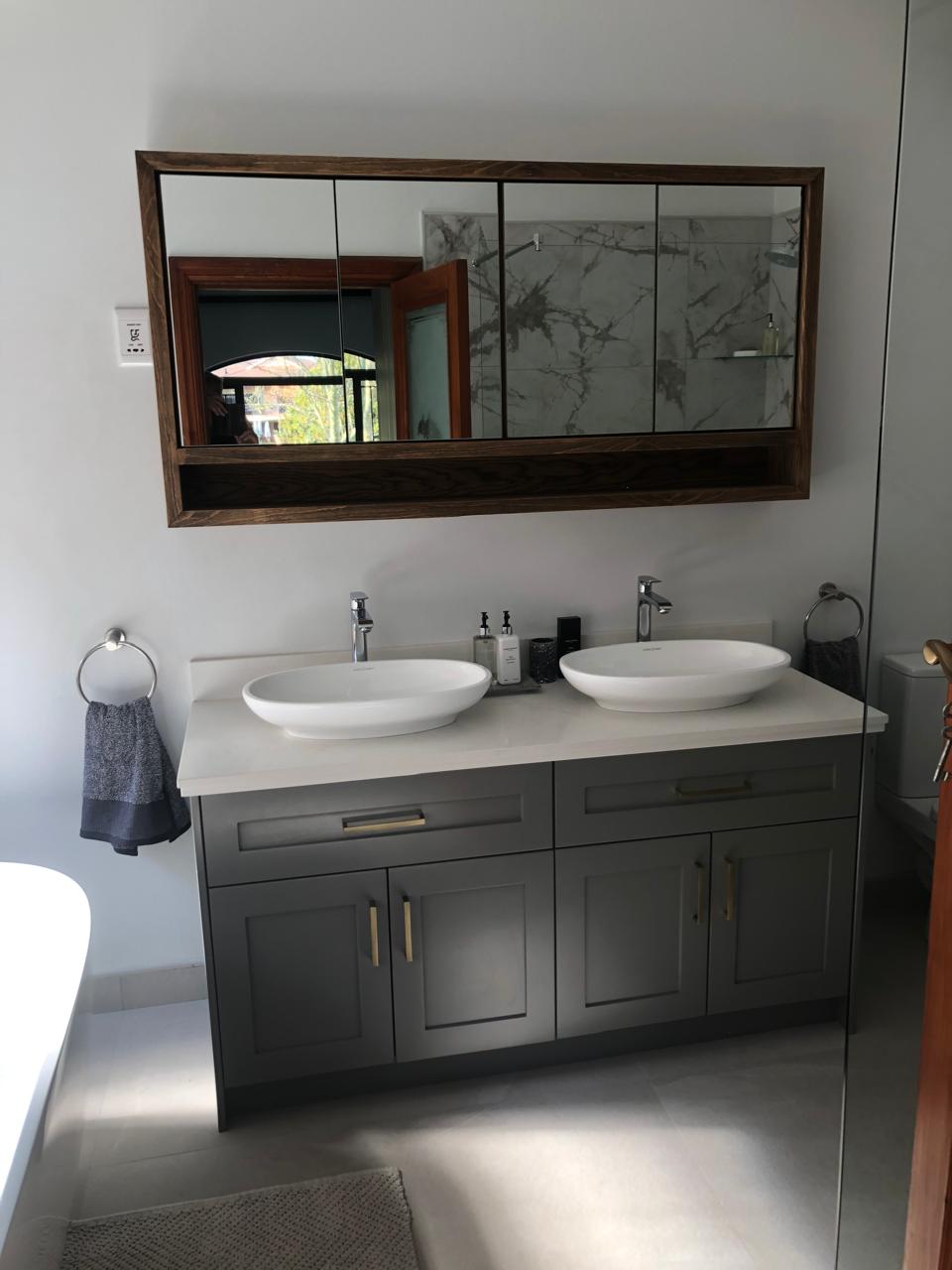
The vanity top is a fabricated component
A stone vanity top is more than a flat piece with a basin hole. The fabricator has to coordinate the actual basin, tap holes, wall position, backsplash or upstand, support, edges, seams and plumbing clearances.
The finished result depends on decisions made before the slab is cut.
Basin types create different cut-outs
Countertop, inset and undermount basins each require different support and edge details. The actual basin should be available before fabrication, because a catalogue dimension is not enough to confirm the rim, cut-out, clips and tap-hole arrangement.
The stone thickness and edge profile also affect the visual proportion of the vanity. A mitred edge can create a substantial appearance, but it needs accurate fabrication and suitable support.
Seams should be intentional
If a top requires a seam, its position should be chosen around the basin, wall lines and stone movement rather than left wherever the slab runs out. The stone’s pattern, finish and natural variation affect how noticeable the join will be.
Large overhangs and floating designs may require specific support. The cabinet, wall and fixing method should be checked for the weight of the finished stone and basin combination.
Coordinate the hidden services
The trap, waste, isolation points and vanity drawers need to agree. A beautiful stone top is not successful if a drawer blocks the plumbing or a concealed connection cannot be serviced.
In a luxury Durban renovation, fabrication, plumbing, cabinetry and tiling should be coordinated as one sequence.
Read more about Signature Bathrooms at Durban bathroom renovations.
Continue planning your renovation
Signature Bathrooms coordinates the design and construction details as one renovation scope. See the bathroom renovation service and continue with related bathroom renovation guidance.