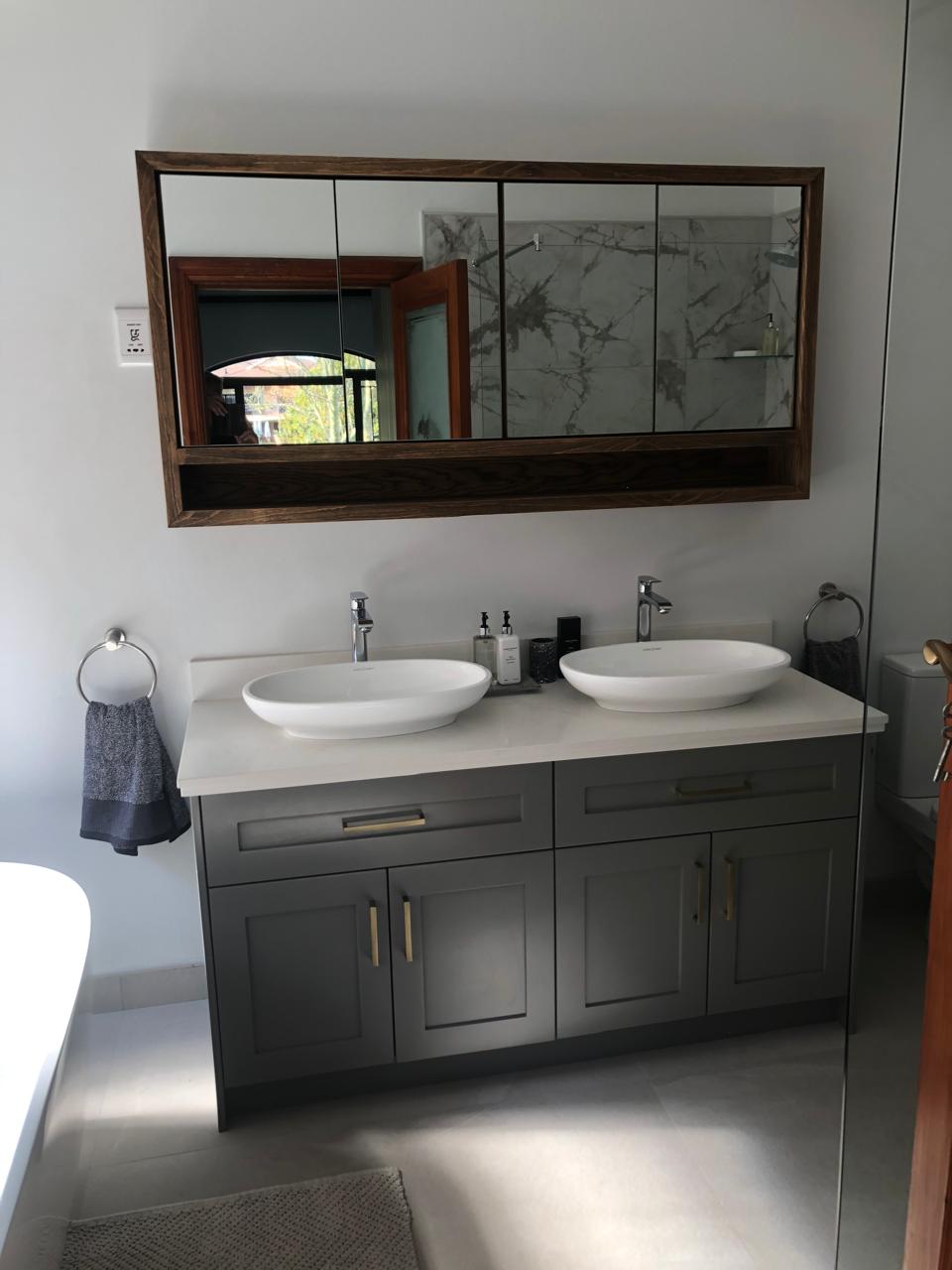
Timber can work in a bathroom, but it needs honest detailing
Warm timber and timber-look cabinetry can make a bathroom feel less clinical. The material should be chosen with the room’s humidity, splash exposure, cleaning routine and ventilation in mind.
Solid timber, veneer, moisture-resistant MDF and decorative board are different products. A photograph cannot identify which material was used, and the construction method should not be assumed from the appearance.
Water reaches the details first
The vulnerable areas are usually joints, end grain, drilled holes, cut-outs, bottom edges and places where water can sit. A coating can protect a surface, but it does not make an open joint or leaking connection safe.
The basin, tap, waste and cabinet should be coordinated so water is directed into the basin and away from vulnerable edges. Any damaged finish should be repaired before moisture reaches the substrate.
Let the room and furniture dry
Ventilation, prompt wiping and sensible splash control are part of the maintenance routine. A timber vanity should not be designed where it is repeatedly soaked with no opportunity to dry.
In a humid Durban bathroom, the right question is not whether timber is allowed. It is whether the material, coating, construction detail and room ventilation are suitable together.
See the Signature Bathrooms renovation approach at Durban bathroom renovations.
Continue planning your renovation
Signature Bathrooms coordinates the design and construction details as one renovation scope. See the bathroom renovation service and continue with related bathroom renovation guidance.