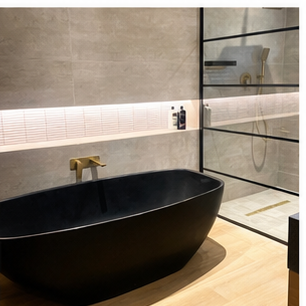
The question is not only whether a freestanding bath can be filled once. It is also what happens afterwards. A deep bath may use a large portion of stored hot water, and the time needed to recover depends on the home’s geyser, heat pump, solar system and other demand.
Recovery is not instantaneous
After a large draw-off, the system may need time to restore the available hot water. This can affect another bathroom, the kitchen or the next person who wants to shower.
Alternative systems behave differently
Heat pumps and solar-assisted systems can have different operating patterns from conventional electric geysers. The bath should be considered against the actual system design and expected household schedule.
The mixer cannot create hot water
A high-flow filler may shorten the filling time while increasing the rate at which hot water is consumed. The bath, filler, temperature setting and hot-water plant need to be treated as one system.
Plan for real usage
Ask when the bath will be used, whether other bathrooms are active, how many people live in the home and whether the household expects consecutive bathing or showering.
The best bath specification includes the unglamorous question: how long will the home need to wait afterwards?
Read about hot-water demand from deep freestanding baths, or see why filler flow rate matters.