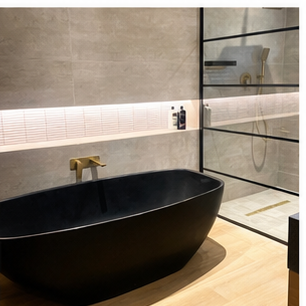
A freestanding bath can look light and sculptural, but the floor experiences the combined load of the exact bath, the water and the person bathing. That is why a product decision sometimes needs a structural conversation before the order is placed.
Use the exact product data
Baths described as “stone”, “mineral” or “composite” can have very different constructions and weights. Do not transfer the weight of one model to another simply because both are marketed as luxury baths.
Capacity is not the same as normal bathing volume
The published maximum capacity may describe the volume to the overflow or another test level. A person normally displaces water, so the amount used in practice can be lower. The calculation still needs the manufacturer’s exact data rather than a guess based on bath length.
The occupant belongs in the calculation
The floor load includes the person using the bath, not just the empty bath and water. A large deep-soaking model can create a very different load from a compact acrylic bath.
Location changes the question
A ground-floor slab, suspended timber floor, upper-level apartment and altered old building may each need different verification. The finished tile may hide the structure, but it does not remove the load.
Confirm before the floor is closed
Keep the exact product sheet, empty weight, maximum capacity, base footprint and installation instructions with the project record. Where the building or position warrants it, obtain advice from an appropriately qualified professional before proceeding.
Read about freestanding-bath floor support in Durban homes, or see why bath capacity is not the same as filled load.