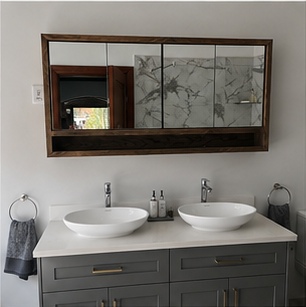
Storage is part of the luxury, not a compromise to it
Open shelves and a simple decorative mirror can look excellent in a photograph. In daily use, toothbrushes, medication, charging cables and skincare quickly return to the counter unless the room has somewhere sensible to put them.
A mirror cabinet can combine reflection, shallow storage and lighting while keeping the vanity visually calm.
The wall has to be designed before the cabinet disappears into it
Recessed storage affects wall framing, plumbing routes, electrical provision, waterproofing and tile setting-out. If the cabinet is chosen after the wall is built, the installer may be forced into a surface-mounted solution or an awkward compromise with the basin and tap.
Confirm the actual cabinet dimensions, door movement, shelf positions and service requirements before closing the wall.
Lighting needs to support the mirror, not fight it
Integrated lighting can be useful, but the exact result depends on brightness, colour rendering, colour temperature, glare and where the light falls on the face. A bright halo around the mirror is not automatically good task lighting.
Where a model includes a driver, socket or control, the access and electrical requirements should be recorded for handover.
Storage should reflect the household
A couple may need separate daily-use zones. A family may need child-safe storage and more frequent cleaning. A guest bathroom may need less storage but a clearer counter. The cabinet should be chosen around the routine rather than because it appears in a catalogue photograph.
Before approving the design, check:
- internal shelf height;
- door clearance and opening direction;
- basin and tap alignment;
- electrical access;
- cleaning around the mirror edges;
- future replacement or repair access.
The best mirror cabinet is quiet in the finished room because the practical decisions were made before the wall and vanity were installed.
Continue planning your renovation
Signature Bathrooms coordinates the design and construction details as one renovation scope. See the bathroom renovation service and continue with related bathroom renovation guidance.