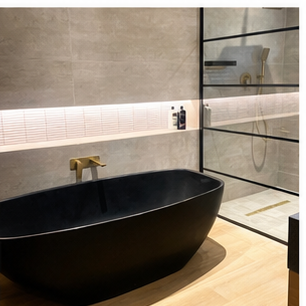
Baths are commonly compared by their outside length, but two baths with the same external dimension can feel completely different. Internal length, usable depth, back angle, shoulder width and the shape of the base matter more to comfort.
Outside dimensions hide the usable space
Thick walls, sloping ends, a wide rim or a deep internal curve can reduce the area available to the bather. A compact bath with a well-designed interior may be more comfortable than a longer bath with less usable length.
Sit in the actual model if possible
Photographs and specification drawings cannot fully show how the back angle supports the body or where the shoulders rest. If a showroom sample is available, sit in the actual model rather than assuming all baths in a size category feel alike.
Deep soaking changes entry height
A deep bath may be comfortable once inside but more difficult to enter and exit. Consider the users, floor finish, grab support and the location of the bath relative to other fittings.
Use the manufacturer’s drawings
Confirm internal dimensions, overflow position, waste location, tap-hole options and the actual base footprint. These details affect both comfort and installation.
The correct bath is the one that fits the person, the room and the building—not merely the one that fits the available wall length.
Read about how to select a freestanding bath for a Durban home, or see how accessibility affects bathroom planning.