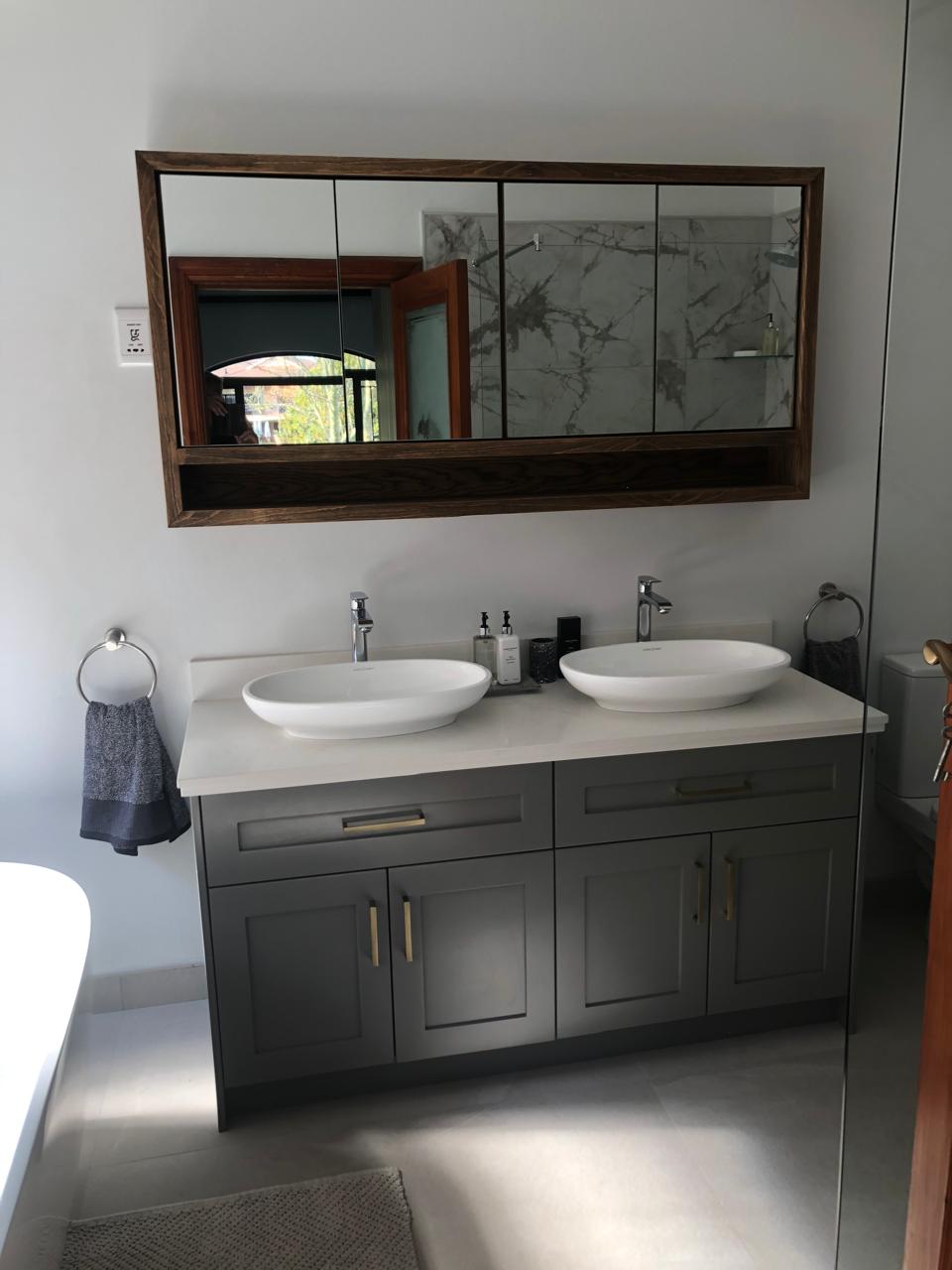
The front panel is rarely the first weak point
A bathroom vanity can have a durable decorative face and still be vulnerable to moisture. Water often reaches the cabinet through a basin cut-out, drilled service hole, raw board edge, damaged laminate, open joint or leaking connection.
The edge detail deserves as much attention as the visible colour and handle selection.
Moisture-resistant does not mean waterproof
Boards designed for humid interior applications can be appropriate for bathroom furniture, but they still need to be detailed and protected correctly. A moisture-resistant panel should not be left soaking at a cut edge or used to conceal an unresolved leak.
The exact board, coating and edge treatment should follow the joinery specification and manufacturer guidance.
Basin cut-outs need protection
Countertop and inset basins create openings in the vanity surface. The cut-out, underside, tap holes and junction with the basin should be sealed and supported appropriately for the actual materials.
Plumbing should be tested before the cabinet is closed around it. A slow leak inside a dark vanity can cause damage long before it becomes visible on the floor.
Design so the cabinet can dry and be serviced
Ventilation, removable access panels and sensible plumbing layout all help the vanity last. Drawers should not block the trap, and the cabinet should not make it impossible to inspect an isolation valve or flexible connection.
A premium vanity is not only a beautiful front. It is a moisture-aware piece of bathroom construction.
Read more about Signature Bathrooms at our renovation process.
Continue planning your renovation
For a related question, continue with related bathroom renovation guidance.