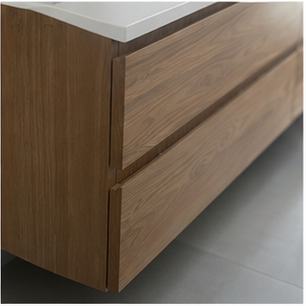
The lowest part of the cabinet lives in the splash zone
Floor-standing bathroom furniture is exposed to more than the water that reaches the basin. Mopping, a shower door that does not contain water properly and a small plumbing leak can all reach the bottom edge or kick zone.
The edge may be less visible than the front, but it is often closer to repeated wetting.
Floating and floor-standing units have different risks
A floating vanity keeps the cabinet away from floor water and can make cleaning easier. It also transfers greater structural responsibility to the wall support and fixing system.
A floor-standing unit may be more forgiving structurally, but its bottom edges, feet, plinth and wall junction need to be designed for the way the room is cleaned and used.
Detail the bottom before fabrication
Confirm the material, edge treatment, plinth or leg detail, floor level, cleaning clearance and how a leak would be detected. A moisture-resistant board is not a waterproof cabinet, and a sealant bead should not hide an inaccessible leak.
The correct solution depends on the specific cabinet and room. The important point is to treat the bottom edge as a design detail rather than an afterthought.
Read why vanity edges swell, or see wall-hung vanity support.