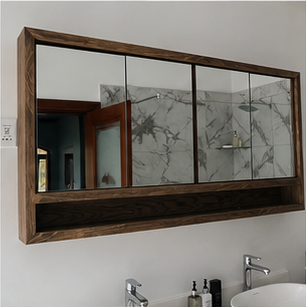
Bathrooms along the Durban and KZN coast can be warm, humid and exposed to salt-laden air. That does not mean every mirror will fail, but it does mean the glass, backing, frame, fixings and ventilation deserve more attention than they might in a dry inland environment.
The vulnerable points are often at the perimeter
Moisture can reach the back of a mirror through an exposed edge, a damaged coating, a poorly sealed cut-out or water trapped behind the glass. Once the backing begins to deteriorate, black spotting at the edge may continue even if the room is cleaned regularly.
Metal finishes need a maintenance plan
Frames, brackets and fixings should be selected with the installation environment in mind. A finish that looks excellent in a showroom may need gentler cleaning and more frequent drying near the coast. Harsh chemicals can damage plated, painted or coloured surfaces.
Ventilation still matters
An anti-fog mirror improves visibility during use, but it does not remove moisture from the room. Extracting humid air outdoors, allowing replacement air and keeping surfaces dry all help reduce the conditions that accelerate mould, corrosion and finish deterioration.
Keep water moving away from the edge
Do not place the bottom edge where basin splash, shower spray or a wet cloth will leave water standing. The installation should allow the perimeter to be inspected and wiped. Silicone should be used deliberately and compatibly, not as a substitute for a sound wall and correct drainage.
Coastal specification is practical luxury
The premium choice is not simply the most expensive mirror. It is a product whose glass, backing, frame and mounting method suit the room, with cleaning and replacement information recorded for the owner.
Read how humidity affects bathroom finishes in coastal Durban, or see why mirror edges go black.