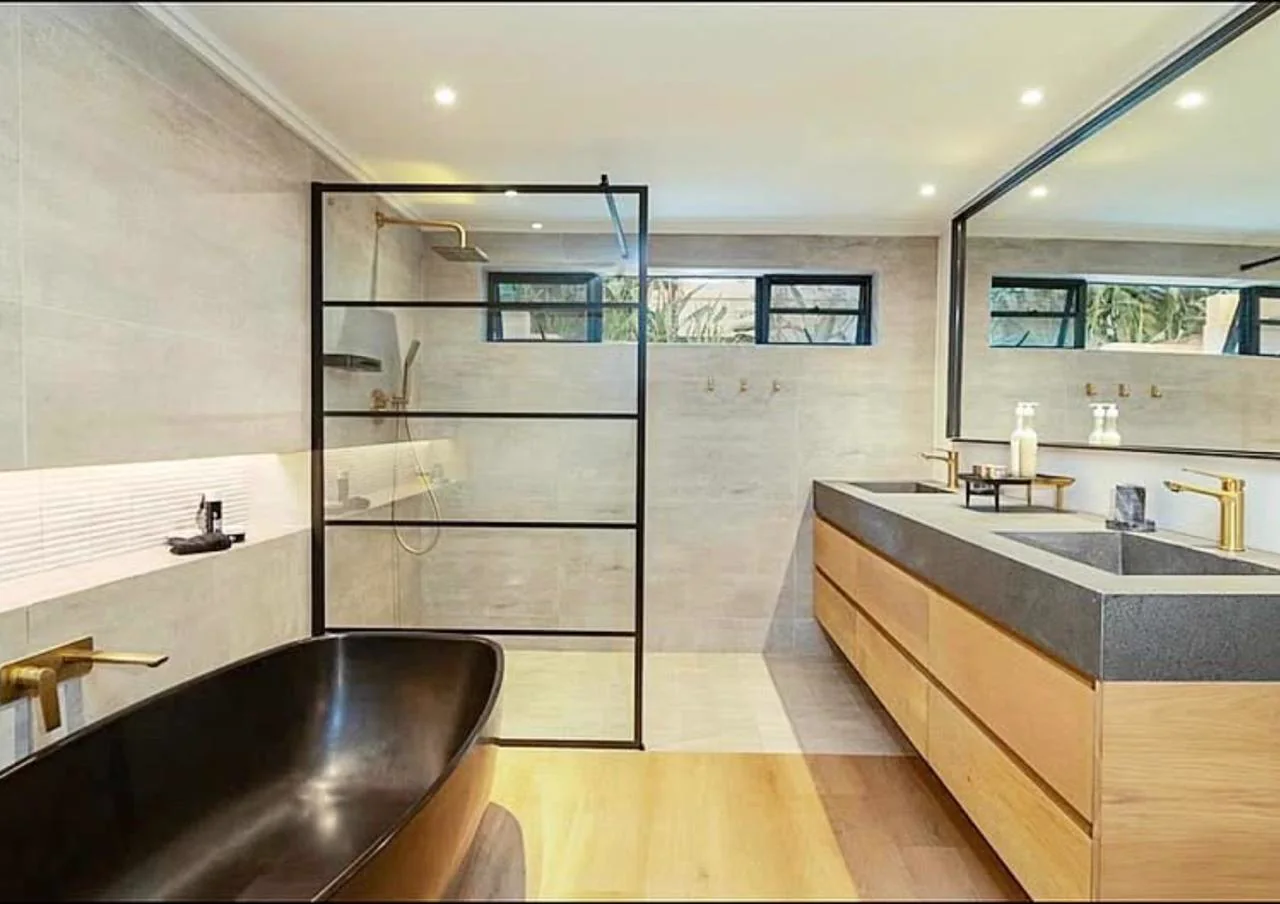
A useful bathroom renovation quote should explain the complete scope of work, who is responsible for each product and service, which amounts are allowances, and what is specifically excluded. It should give the homeowner and contractor the same written understanding of the project before work begins.
A total at the bottom of a page is not enough. Bathroom renovations bring building work, plumbing, electrical work, waterproofing, tiling, joinery, glass and finishing into one relatively small room. If those responsibilities are not described clearly, two quotations that appear similar may represent very different projects.
Does the quote describe the bathroom and agreed result?
The quotation should identify the bathroom being renovated and record the broad result discussed during the consultation. That may include whether the existing layout remains, which fittings move, what storage is required and whether the project is a complete renovation or a limited replacement of selected elements.
This matters because phrases such as “renovate bathroom” or “supply and fit” leave too much open to interpretation. A clear scope creates a reference point for product selections, construction decisions and any later changes.
Before a quotation is prepared, an on-site assessment is normally more useful than relying on room dimensions and photographs alone. Access, existing services and visible signs of moisture or movement can affect the work required.
What stripping and removal work is included?
The quote should state what will be removed. Depending on the project, this may include:
- sanitaryware and brassware;
- shower glass or enclosures;
- existing vanity units and mirrors;
- wall and floor finishes;
- ceilings, bulkheads or selected wall sections; and
- redundant plumbing or electrical fittings.
It should also explain whether rubble handling, removal and lawful disposal are included. In an apartment or estate, the route through the property, lift requirements, working hours and protection of communal areas may affect how this stage is managed.
Is preparation included, or only the visible finishes?
Tiles and fittings are the visible part of the completed bathroom, but their performance depends on the work beneath them. A complete quotation should address the preparation expected after stripping.
That may include repairing or replacing damaged substrates, correcting surfaces, forming suitable shower falls and preparing walls or floors for the selected finish. Existing conditions cannot always be confirmed before demolition, so the quote should distinguish between work already allowed for and concealed defects that would need to be assessed once exposed.
The quotation should also identify where waterproofing is included and what areas are being treated. A homeowner should not have to assume that waterproofing is part of a tiling price.
For properties exposed to persistent humidity and salt-laden coastal air, our guide to coastal bathroom waterproofing and ventilation explains why preparation and moisture management deserve early attention.
Are plumbing, electrical work and ventilation clearly defined?
Every service change should be connected to an agreed layout. The plumbing portion should explain whether fittings remain in their current positions or whether water and waste points are being altered. It should also identify which sanitaryware, taps, mixers and accessories are being installed.
Electrical work may include lighting, extraction, switches, socket outlets, heated towel rails or other specified fittings. The quote should make clear whether electrical products are supplied by the contractor, selected from an allowance or supplied by the client.
Ventilation should be considered as part of the room rather than treated as a decorative afterthought. Where mechanical extraction or other work is proposed, its inclusion and responsibility should be stated.
Which products are fixed, and which are allowances?
A quotation can only give a firm product amount when the exact product and quantity are known. If tiles, sanitaryware, brassware, lighting or accessories have not yet been selected, the quote should use clearly labelled allowances rather than silently assuming the least expensive option.
For each important product category, look for:
- the selected product or an understandable description;
- the quantity or basis of calculation;
- the amount allowed;
- whether delivery is included;
- who will place the order; and
- who carries responsibility for checking the product on arrival.
An allowance is not automatically a problem. It is a practical way to price an unresolved selection, provided it is visible and realistic. When the final selection differs from the allowance, the cost difference should be recorded before ordering.
Client-supplied products should also be listed. The quotation should not leave uncertainty about who supplies the bath, basin, toilet, taps, tiles, mirrors, accessories or lighting.
Does the quote include tiling details?
The tiling description should identify the areas to be tiled and the basis of the allowance or selected product. Tile dimensions and layout can affect surface preparation, setting out, cutting and installation time.
The quote should also address trims, grout, movement joints and other necessary installation materials where relevant to the agreed design. Feature patterns, niches, mitred edges or unusually large tiles should not be assumed to form part of a standard tiling amount unless they are described.
How are custom glass, stone and cabinetry handled?
Vanities, stone surfaces, mirrors and shower glass are often measured only after earlier construction stages are complete. Their quotation should still identify the intended item, finish, hardware and allowance or agreed price.
The programme should recognise that final site measurement and manufacturing take time. If temporary delays between stages are likely, that should be discussed before the project begins rather than discovered near completion.
Our completed bathroom portfolio shows how cabinetry, mirrors, glass, lighting and finishes need to work as one composition rather than as isolated purchases.
Are access, protection and site management included?
A well-managed renovation protects more than the bathroom. The quotation or supporting scope should establish:
- how access through the home will be protected;
- where materials may be stored;
- how dust and rubble will be managed;
- any estate or body corporate requirements;
- permitted working hours; and
- whether the home will remain occupied during the work.
These details may not appear as expensive products, but they influence the organisation and daily experience of the project.
What is excluded from the quotation?
Exclusions are as important as inclusions. They show which work or products have not been priced and prevent assumptions from being mistaken for commitments.
Common areas requiring clarification include painting outside the bathroom, structural alterations, specialist design fees, approval costs, work to concealed services beyond the agreed room, and repairs arising from defects that could not reasonably be inspected before stripping.
This does not mean every unknown should be charged automatically. It means that an unforeseen condition should be shown to the homeowner, explained and priced before additional work proceeds.
How will changes be approved?
Renovation decisions sometimes change after work begins. A useful quotation should be supported by a simple variation process: describe the change, explain its cost and programme effect, and obtain approval before proceeding.
Verbal decisions are easily misunderstood. Written confirmation protects both parties and keeps the working scope current.
Does it explain timing, payments and handover?
The quotation should state the expected project duration or refer to an agreed programme, while recognising that product availability and concealed conditions may affect it. Our detailed guide explains how long a full bathroom renovation can take and what commonly changes the sequence.
Payment stages should be written clearly and connected to the contractor’s terms. The handover scope should also explain completion, snagging and any applicable product information, certificates or guarantees.
How should you compare two bathroom renovation quotes?
Do not compare only the final totals. Place the quotations alongside each other and check:
- whether they describe the same layout and outcome;
- which stripping, preparation and waterproofing work is included;
- whether plumbing and electrical changes match;
- which products are fixed and which are allowances;
- who supplies each fitting and finish;
- whether custom glass, stone and cabinetry are included;
- how access, protection and rubble are handled; and
- what each contractor has excluded.
A lower total may represent good value, but it may also represent fewer products, less preparation or more unresolved allowances. The purpose of a detailed comparison is to understand the difference before choosing.
What should you provide when requesting a quote?
Prepare photographs, the property location, the bathroom type, the problems you want solved and any products or finishes already selected. Mention access restrictions and whether another bathroom will remain available during construction.
Our bathroom renovation planning checklist will help organise this information before the first consultation.
Signature Bathrooms provides turnkey bathroom renovations across Durban, the North Coast and the Upper Highway, with one point of contact coordinating the agreed scope. Review our complete bathroom renovation service or arrange an on-site consultation with Richard to develop a quotation around the actual room.