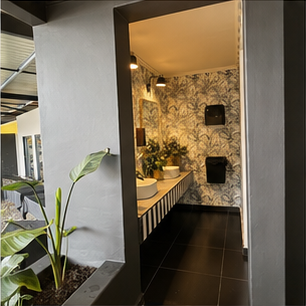
Wallpaper belongs in the right part of the bathroom
A decorative wallcovering can give a bathroom more character than a room tiled from floor to ceiling. It can also fail quickly if it is placed in direct shower spray, installed over a damp wall or exposed to humidity that the room cannot clear.
The first question is not whether wallpaper is attractive. It is whether the wall location and the product are appropriate for the moisture conditions.
Keep direct water in a wet-area system
The inside of a shower, the wall behind a bath that is regularly splashed, and areas around an open basin need finishes designed for that exposure. Decorative wallpaper is usually better suited to a dry or low-splash feature wall, with tiled or otherwise suitable wet-area finishes where liquid water is expected.
The transition between the decorative wall and the wet area should be planned so water cannot work behind the edge.
Humidity still matters
Even outside the shower, a Durban bathroom can carry a high moisture load. Extraction to an appropriate external location, replacement air and sensible drying all affect the life of a wallcovering.
Ventilation does not make an unsuitable product suitable, but poor ventilation can shorten the life of an otherwise appropriate decorative finish.
Substrate and installation matter
The wall should be sound, dry, clean and suitably prepared. Adhesive, seam treatment and edge finishing should follow the product’s instructions. A wallcovering cannot conceal a damp problem responsibly.
The strongest result is usually a deliberate composition: decorative surface where it can be appreciated, robust wet-area construction where the water actually lands.
See the Signature Bathrooms process at our renovation process.
Continue planning your renovation
For a related question, continue with related bathroom renovation guidance.