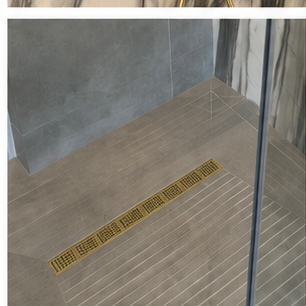
Large-format porcelain has an unmistakable presence, but the largest tile is not automatically the most luxurious choice for a shower floor. A well-selected mosaic can be more appropriate because it works with the shape of the floor.
More joints can help a shaped fall
A shower floor has to direct water to a point or linear waste. Smaller pieces can follow a change in plane with more manageable cuts and joints. That can be useful where the fall geometry would make a large tile difficult to lay cleanly.
The exact layout still needs to be designed. More joints are not a substitute for a correctly prepared and waterproofed floor.
Surface and grout influence grip
The actual tile finish, joint pattern and maintenance requirements all contribute to how the floor feels in use. A mosaic with a suitable surface may give the room a more controlled walking texture than a large polished tile.
The product’s technical information should be checked for the intended wet application. “Mosaic” alone does not guarantee suitability.
Scale can make the room feel more resolved
A smaller floor format can visually distinguish the shower from the main bathroom without introducing another colour. It can also relate well to a niche, wall pattern or basin detail when the grout and tile direction are coordinated.
That sense of proportion is part of luxury. The most expensive room is not the one with the fewest joints; it is the one where every joint appears intentional.
A good choice is a coordinated choice
The shower floor, drain, falls, waterproofing, grout and wall tiles should be considered together. Sometimes a mosaic is the most practical way to achieve the desired result. Sometimes a larger format is appropriate. The answer belongs to the room, not to a general rule about tile size.
Continue with shower-floor tile size and drainage planning, or read why a walk-in shower can flood a Durban bathroom.