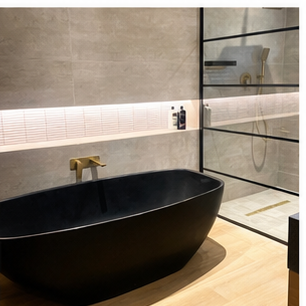
The long-term value of a freestanding bath depends partly on what happens when something goes wrong. A chip, scratch, stained finish, loose waste or discoloured surface may be repairable on one product and much harder to resolve on another.
Material determines the repair route
Composite, mineral, acrylic and coated baths have different repair methods. A local specialist may be able to restore one surface, while another requires a manufacturer-approved process or complete replacement.
Colour can complicate repairs
A white matt bath may be easier to match than a custom colour or heavily pigmented finish. Ask how colour matching is handled and whether the warranty covers the visible finish for the same period as the structure.
Installation affects future work
A bath that is permanently sealed into stone or surrounded by fixed cabinetry may be difficult to remove. Service access beneath and around the product should be considered before the design is finalised.
Care is part of repair prevention
Use the approved cleaning products, avoid thermal shock where the manufacturer warns against it and protect the surface during construction. Keeping the product documents is as important as keeping the tile batch numbers.
Compare ownership, not only showroom appearance
Ask the supplier who handles repairs, which parts are stocked locally, what the finish warranty excludes and how long support is expected to continue. A premium bath should come with a credible ownership plan.
Read about how bath materials differ, or see why spare-parts planning matters in a luxury bathroom.