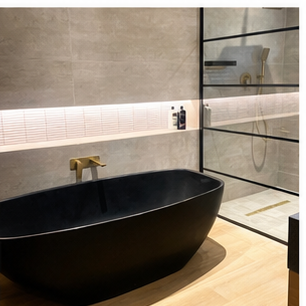
The overflow is easy to overlook because it may be integrated into the bath or hidden within the waste fitting. It still affects how high the bath can be filled, how the waste is connected and what happens if the filler is left running.
Overflow arrangements are product-specific
Some baths have a visible overflow opening, some use an integrated channel and some are supplied with a particular waste and overflow kit. Do not assume that any universal fitting will suit the bath or preserve its warranty.
Capacity depends on the detail
The stated bath capacity may be measured to a defined level, often in relation to the overflow. The usable bathing volume is affected by the bather and the shape of the interior, so the overflow should not be treated as a simple decoration.
No overflow needs a clear decision
A bath without a traditional visible overflow may have a different filling limit, waste system or operating instruction. Confirm how the product manages overfilling and whether the installation requires a particular control or monitoring arrangement.
Make the waste accessible enough
The overflow and waste connection should be installed exactly as specified and tested before the bath is permanently sealed. Keep the product instructions and part information for future maintenance.
Appearance should follow safe function
A discreet overflow can preserve a clean sculptural form, but it should not be chosen by hiding a technical problem. The safest premium detail is the one that works reliably and can be serviced.
Read about why bath waste kits are not generic, or see how bath installation should be tested before handover.