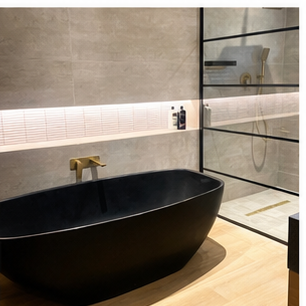
The empty bath is not the design load
A freestanding bath can look light and sculptural while carrying a substantial combined load once filled and occupied. The bath’s construction, water volume, user weight and supporting floor should be considered before installation, particularly in an upstairs or apartment property.
Where the structure creates uncertainty, it needs to be checked by the appropriate competent professional.
Hot water is part of the design
The bath’s capacity affects how much hot water is required and how the system recovers afterwards. A large bath filler may deliver water quickly, but it cannot create hot-water capacity that the geyser or supply does not have.
The actual bath dimensions, usable fill level, water-heating arrangement and other simultaneous bathroom demands should be considered before the product is ordered.
Waste and tap access still matter
The waste route, trap, access and finished floor level need to be coordinated with the exact bath. The filler must reach the bath correctly without making cleaning awkward, and the connections should remain serviceable.
Movement at the bath-to-floor junction can damage sealant, so the base and fixing method should follow the manufacturer’s requirements.
Luxury means the room works every day
The strongest freestanding-bath design leaves room to clean around the bath, use the filler comfortably and maintain the waste. A beautiful object becomes a successful bathroom feature only when the building can support its practical demands.
Read more about Signature Bathrooms at our renovation process.
Continue planning your renovation
For a related question, continue with related bathroom renovation guidance.