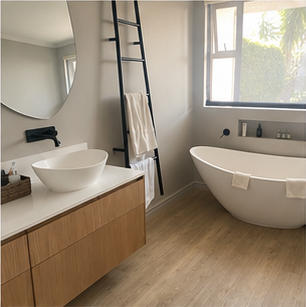
A furniture-style leg does not explain the load path
Some floor-standing bathroom units use feet or legs as part of the visual design. That does not necessarily mean the legs carry the full load of the cabinet, countertop, basin and contents.
Manufacturer installation guidance may still require the unit to be fixed to the wall. A decorative support should not be treated as a substitute for the specified fixing system.
Check the actual construction
The support depends on the cabinet, wall, floor, countertop and basin. A heavy stone top and ceramic basin create a different load from a lightweight compact unit. A wall that is not suitable for the intended fixing may need reinforcement or a different installation approach.
The same principle applies to custom joinery. The appearance of legs, brackets or a plinth is not enough to infer how the completed cabinet should be supported.
Design the support before the finish
Confirm the wall fixing, floor level, plinth or leg detail, plumbing route and cleaning access before tiling and fabrication. The visible result should be stable, level and serviceable rather than merely furniture-like.
Read why a floating vanity hangs from the wall, or see why old walls need measured cabinetry details.