A bath with hot and cold water now sounds ordinary. Historically, it represented a major change in the way a home was planned and used.
Historical material from Natal records the gradual appearance of homes described as having bathrooms, baths and hot and cold water. That description is more than a list of amenities. It marks the point where water supply, heating, sanitary fittings and household routines began to operate as one domestic system.
Modern luxury bathrooms still depend on that same relationship.
A bathroom needs more than a water connection
Adding a bath or shower involves several linked questions:
- Is the supply pressure suitable for the chosen fitting?
- Is there enough hot water for the household’s use pattern?
- Can the waste remove water quickly enough?
- Has the pipework been sized and routed appropriately?
- Will the pressure remain balanced between hot and cold supplies?
- Can the concealed components be accessed later?
The visual design may begin with a freestanding bath or a large rain shower, but the technical design begins with the water system.
Hot water changed household routines
Before reliable hot and cold water services were widely available, bathing required more preparation. Water had to be carried, heated, stored and used in a space suited to the task. The rise of dedicated bathrooms changed both the privacy and convenience of bathing.
Later housing descriptions in Natal refer to baths and hot and cold water as part of the home’s accommodation. That combination helped turn bathing from a separate household operation into a built-in daily routine.
The modern equivalent is not simply “install a bigger geyser”. A renovation needs to consider the number of users, the bath capacity, shower flow rates, simultaneous use and the recovery time of the hot-water system.
The luxury rain shower exposes weak planning
A high-flow rain shower can make a pressure problem obvious. So can a bathroom with two shower outlets, a hand shower and a bath filler expected to operate within the same household system.
The fitting may be premium, but it cannot create pressure that the supply does not provide. Restrictions in pipework, filters, valves, pressure-reducing devices and the distance from the hot-water source can all affect the result.
This is why Signature Bathrooms treats product selection and installation planning as connected decisions. The chosen shower system must be checked against its working-pressure and flow requirements before the wall is closed.
The bath became part of the room’s architecture
Once hot and cold water could be brought reliably into the bathroom, the bath stopped being only a vessel for washing. Its position began to influence the room’s architecture.
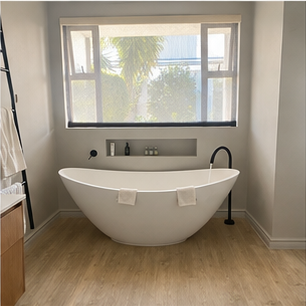
A freestanding bath may sit beneath a window, beside a feature wall or at the centre of a large main bathroom. The design looks simple, but the installation still needs:
- a stable and level floor;
- a correctly positioned waste;
- suitable filler reach and height;
- access for maintenance;
- adequate hot-water planning;
- splash and movement control;
- privacy appropriate to the glazing and room position.
The modern bath is therefore a piece of architecture as well as a plumbing fixture.
What older homes teach us about water services
Older Durban homes can contain several generations of plumbing work. A bathroom may have begun with one layout, received a later hot-water connection, been retiled, and then been altered again for a shower or vanity.
That history can produce:
- undersized or inaccessible pipes;
- abandoned connections inside walls;
- inconsistent hot and cold pressure;
- wastes that do not suit the proposed layout;
- floor levels that make a new shower fall difficult;
- concealed valves installed without a record of their location.
Richard McKie’s roughly 35 years of work through Reno Incorporated and Signature Bathrooms have reinforced a straightforward lesson: a bathroom cannot be specified properly until the existing services are understood.
Better luxury starts with better questions
The most useful luxury bathroom conversation is not only about finishes. It also covers the experience the room must provide.
Will two people shower at the same time? Will the bath be used often or mainly form part of the room’s composition? Is the hot-water system shared with other bathrooms? Does the household prefer a strong shower or a quieter, lower-flow system? Is there a backup plan when municipal supply or electricity is interrupted?
These questions make the final specification more realistic. They also help prevent a beautiful installation from becoming disappointing in daily use.
Research note
This article was informed by Natal historical material describing bathrooms, baths, domestic water supply and hot-and-cold-water housing facilities. The archive shows historical examples; it does not establish one universal date when every Natal home acquired an indoor bathroom. Current plumbing and product requirements remain property- and product-specific.
For modern planning, see our guide to premium rain showers and water pressure and our page on Durban bathroom renovations.