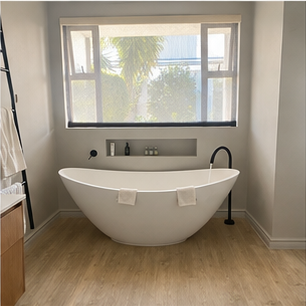
The private bathroom depends on infrastructure that is easy to forget when the room is working properly. Water has to arrive with suitable pressure, hot water has to be produced and stored, used water has to leave, and the building has to keep moisture from spreading into the structure.
Durban’s modern bathrooms sit at the end of a much longer water story in Natal: from wells, public water sources and carried water to municipal supply, household pipes, baths and water-borne sanitation.
Water supply changed the shape of domestic life
Historical Natal material records the importance of water supply to growing settlements and homes. As reliable services expanded, water could be brought closer to the household and used more routinely for washing, cooking and sanitation.
That change affected the building. Rooms could be designed around fixed basins, baths and toilets rather than temporary arrangements. Pipes and wastes became part of the construction, even though they were hidden from view.
The modern bathroom still depends on those hidden services. A design can look simple because the engineering is concealed, not because it is absent.
Private water does not mean unlimited water
A luxury bathroom may include several outlets, but the available water supply remains finite. A bath filler, overhead shower, hand shower and basin can all be premium products without being suitable for simultaneous use on the same system.
Before a specification is finalised, the renovation should consider:
- incoming pressure and flow;
- hot and cold pressure balance;
- the geyser or heat-pump arrangement;
- expected shower flow rates;
- the volume and fill time of a bath;
- the length and size of supply runs;
- municipal interruptions and household backup plans.
The water history of a property may also matter. Older pipework, later extensions and changes to the building can create restrictions that are not obvious from the fittings currently installed.
Drainage is the other half of the bathroom
Water supply receives most of the attention because it is visible at the tap. Drainage determines whether the room remains usable after the water has been used.
A modern walk-in shower may require a different waste route and floor build-up from the original bath. A linear drain may need careful alignment and access. A toilet cannot simply be moved because the new position looks better on a plan if the waste route, falls and finished levels cannot support it.
The room’s history can reveal why a proposed layout is difficult. A former service room may have been built around one waste position. A later extension may have raised the floor. An apartment may have fixed service routes that cannot be altered without approval.
What the water story means for renovation
Richard McKie has worked through Reno Incorporated and Signature Bathrooms for roughly 35 years. That experience has reinforced a practical principle: the best bathroom design begins with an understanding of the building’s services.
Before the room is closed, the team should know:
- which pipes are new and which are retained;
- where isolation points are located;
- how the wastes connect;
- how the shower floor will fall;
- what has been waterproofed and tested;
- where future access is possible;
- what the homeowner should maintain.
This record is particularly valuable in older homes. It gives the next owner or service technician a starting point instead of requiring the wall or floor to be opened by guesswork.
A bathroom is a small piece of civic infrastructure
The modern bathroom is private, but it depends on public systems: water treatment, distribution, electricity, drainage and municipal maintenance. The history of Durban’s water and sanitation services is therefore also part of the history of the domestic bathroom.
When the system works, the room feels effortless. Good renovation work respects the infrastructure that makes that effortlessness possible.
For current design guidance, see our articles on rain showers and pressure, shower drains and plumbing compliance.
Research note
This article was informed by historical Natal material concerning water supply, sanitation and domestic services. It does not attempt to provide a complete municipal history of Durban or a universal plumbing specification. Current design and installation decisions remain property-specific.