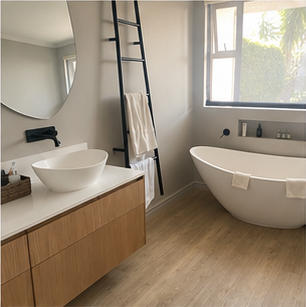
Hotels are useful teachers, but they are not houses
Hotel bathrooms are designed for short stays, quick understanding and consistent housekeeping. That makes them valuable references for intuitive controls, good mirror lighting, towel placement, easy cleaning and a clear shower experience.
But copying a hotel room exactly can create a poor home bathroom.
What is worth borrowing
Good hospitality design usually answers practical questions without asking the guest to think:
- Where is the light switch?
- Which control operates the shower?
- Where does the towel go?
- Can the mirror be used without standing in shadow?
- Is the basin easy to approach?
- Can the room be cleaned without fighting unnecessary edges?
These principles transfer well to a Durban home.
What may fail at home
Hotels have daily housekeeping, shorter occupancy and maintenance teams. A home needs storage for personal products, charging points, spare towels and cleaning supplies. A surface that looks perfect for a weekend stay may become visual clutter after a month.
Some hotel features also assume frequent replacement or specialist maintenance. A home should have realistic access to spare parts, service information and repairs.
Apply the hospitality test to a real household
Walk through the bathroom as if you are arriving for the first time, then test it as a resident:
- Can two people use the room without colliding?
- Can wet towels dry properly?
- Is the extractor quiet enough to use?
- Is there storage for the items that normally live on the counter?
- Can a plumber or electrician reach the important services later?
The goal is not to build a hotel bathroom in a house. It is to borrow hospitality’s clarity while retaining the storage, maintenance and personal routines that make a home work.
Continue planning your renovation
Signature Bathrooms coordinates the design and construction details as one renovation scope. See the bathroom renovation service and continue with related bathroom renovation guidance.